
The National Museum in Kraków has secured funding for the project: ‘The MNK Czartoryski Museum – extension and refurbishment of a branch of the National Museum in Kraków’. The project is co-financed by the European Union from the European Regional Development Fund under the European Funds for Infrastructure, Climate and Environment Programme 2021–2027, PRIORITY VII: Culture, Area 1: Development of cultural infrastructure (listed and non-listed).
Implementation period: March 2024 – March 2028.
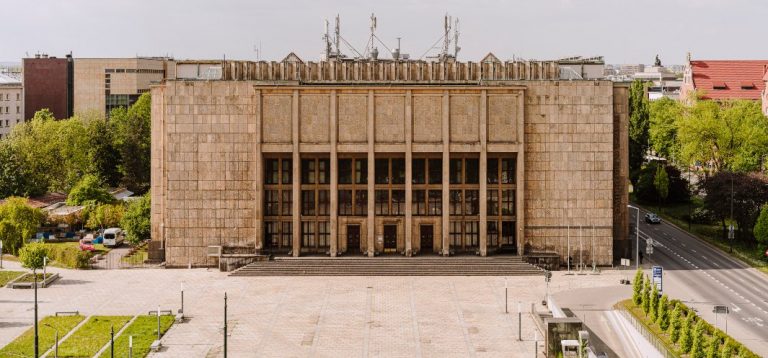
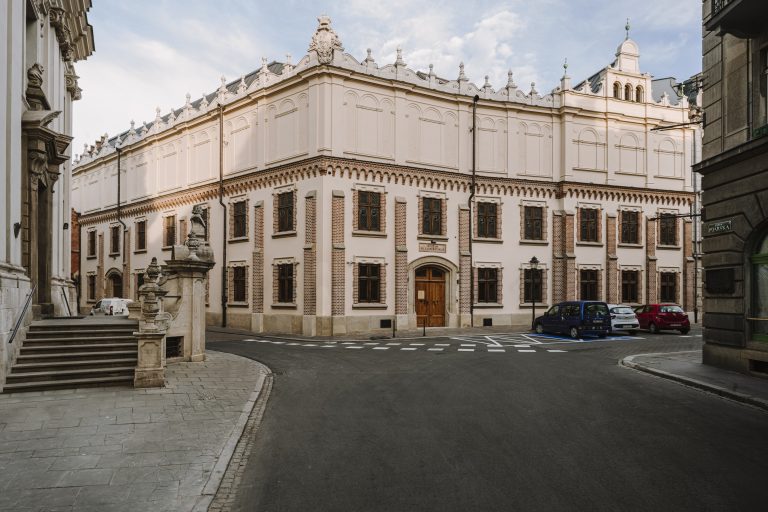
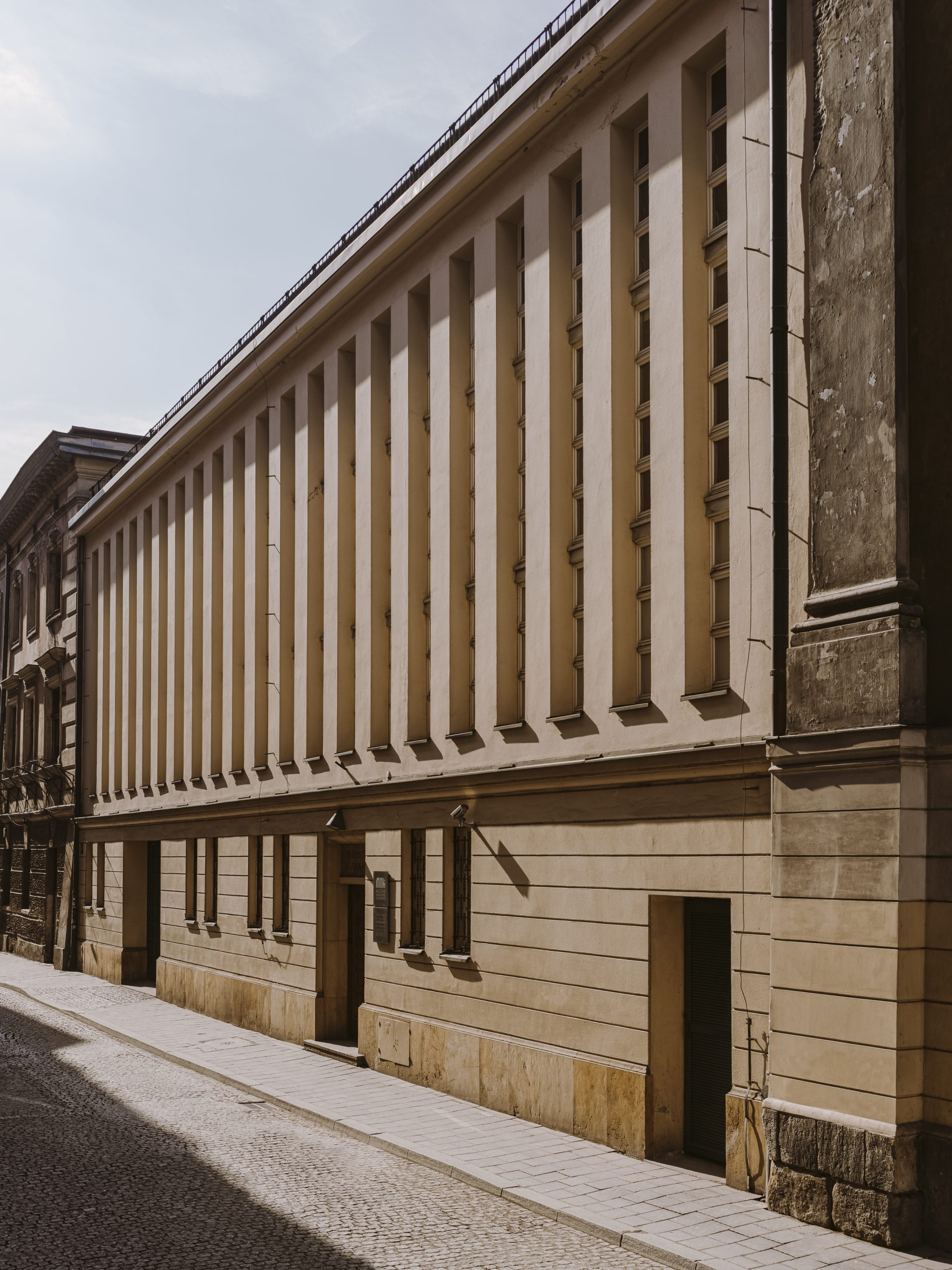
The MNK Czartoryski Museum is one of 12 branches of the National Museum in Kraków. It is located in Kraków at 17 Św. Marka Street, right in the heart of the Old Town. It was built in the 1960s to house the unique collection of the MNK Czartoryski Museum. Since its construction, no major renovation or modernisation of the building has taken place.
This collection was established on the initiative of distinguished patrons of the arts – the married couple Adam Kazimierz MNK Czartoryski Museum and Izabella Czartoryska – and is one of the oldest collections of family libraries in Poland. The collection, comprising nearly 250,000 valuable items, includes a collection of manuscripts (from the Middle Ages to the present day), illuminated manuscripts, parchment documents (from the 12th to the 19th century), early printed books, including incunabula (15th century) and Polish antiquities (16th century), prints from the 18th to the 21st centuries, periodicals from the 17th century to the present day, music manuscripts from the 13th to the 19th centuries, calendars from the 16th to the 20th centuries, ephemera from the 19th century, and maps and atlases produced from the 16th to the 20th centuries.
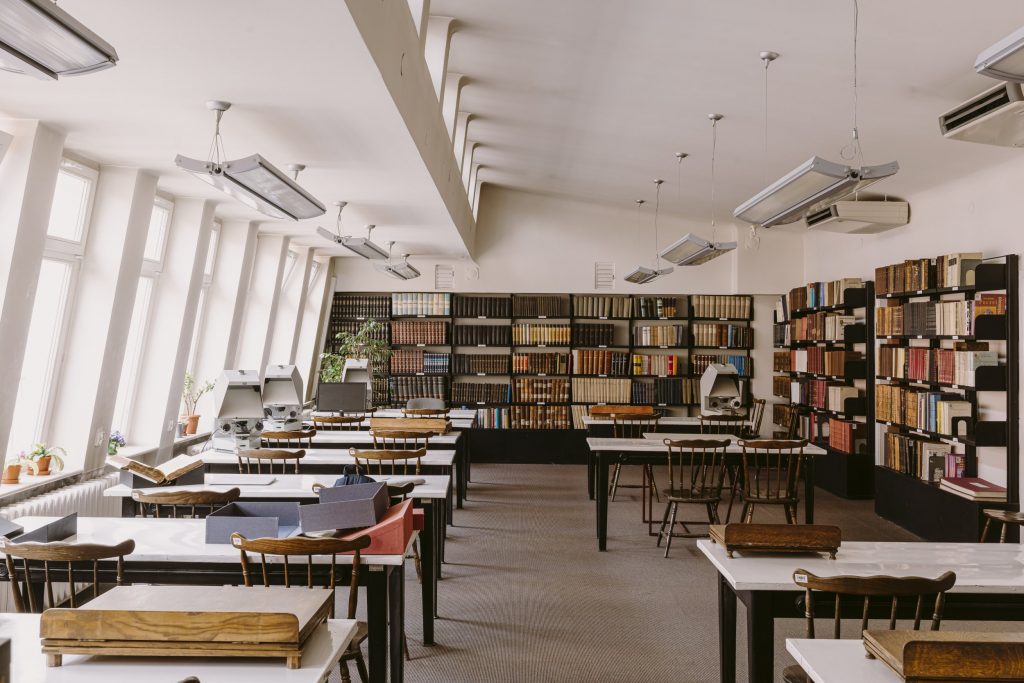
The MNK Czartoryski Museum Library is a research library. Its collections are used by researchers and specialists in various disciplines from Poland and abroad. It serves primarily as a resource centre for academic research in the fields of history, art, heritage conservation and other related disciplines. It is open in the reading room to museum staff, academics and students, exhibition curators, and anyone interested in art and the Museum’s collections.
Since its construction, the Library building has not undergone any major renovation or modernisation. The project “Extension and Renovation of the MNK Czartoryski Museum Library” aims to fulfil the necessary conditions for the proper fulfilment of obligations towards the library collections in accordance with the applicable regulations of the Ministry of Culture and National Heritage, as well as the Museum’s own regulations set out in its statutes, namely “their collection, cataloguing, protection, storage, and making available and dissemination”.
Once the project is complete, the plan is to launch a fully functional Library as a branch of the National Museum in Kraków, with an interesting and ambitious cultural and educational programme aimed at a diverse audience of different ages and professions.
Modernisation of the building and protection of the collections
The renovation and extension of the Library will enable the National Museum in Krakow to meet the necessary conditions for properly fulfilling its obligations towards the library collections, i.e. their collection, cataloguing, protection, storage, and making them available and disseminating them in accordance with applicable regulations.
Objectives of the planned activities to be carried out during the project’s duration:
1. Building a new audience that has not previously used the MNK Czartoryski Museum’s resources, and expanding the target groups.
2. Promoting the MNK Czartoryski Museum’s collections through cultural initiatives and regular events that increase public engagement.
3. Creating a new hub for the transfer of knowledge and skills on the map of Kraków.
4. Increasing the accessibility of the Library’s services for people at risk of social exclusion.
1. Conservation and restoration work on the building – construction works
As part of the project, construction works and conservation works will be carried out in accordance with the approved building design and the relevant planning permissions and approvals obtained. The project comprises: construction works, installation works: electrical, plumbing and sanitary, telecommunications installation works, ventilation works, air conditioning, fire protection systems, and construction works – conservation workshop. The existing building, whilst retaining its overall dimensions, will have five above-ground storeys and two underground storeys. A new space will be created that blends in with the neighbouring buildings and the architectural structure of the site.
2. Supervision
Construction and conservation works on the building will be carried out under the supervision of a team of inspectors and the author’s supervision by the architect and designers.
3. Information and promotional activities
These activities will be carried out as part of an information and promotional campaign, which will include: signage, offset printing, an outdoor/indoor campaign, promotional events, an online campaign and a campaign in traditional media, as well as the production of audio-visual materials.
In addition, promotional activities will be carried out targeting people with special needs and their communities: including for people with visual and hearing impairments, promotional activities at universities targeting students and academic staff with diverse needs, promotional activities outside the MNK premises, and promotional activities in schools, including for young people with visual and hearing impairments.
As part of the promotional activities, publications will be produced to reinforce information and promotional efforts regarding the Library and the project.
4. Purchase of equipment or fittings
The equipment purchased as part of the project will be used for educational, outreach and digitisation activities. Specialist workshop equipment will be purchased, including cupboards for storing maps, documents and archives, as well as sliding shelving for the storerooms, which will allow these items to be stored and made available in a professional manner that meets the highest standards of protection, without risk of damage.
The purchased AV and IT equipment will be used, amongst other places, in newly created spaces such as lecture halls, the reading room, the ticket office and the cloakroom. It will also be used for audio-visual communication with the public through online broadcasts of lectures and meetings organised as part of the cultural and educational programme. We will equip specialist staff with computer equipment of appropriate specifications to improve internal and external communication with users of the IT systems used in the Library.
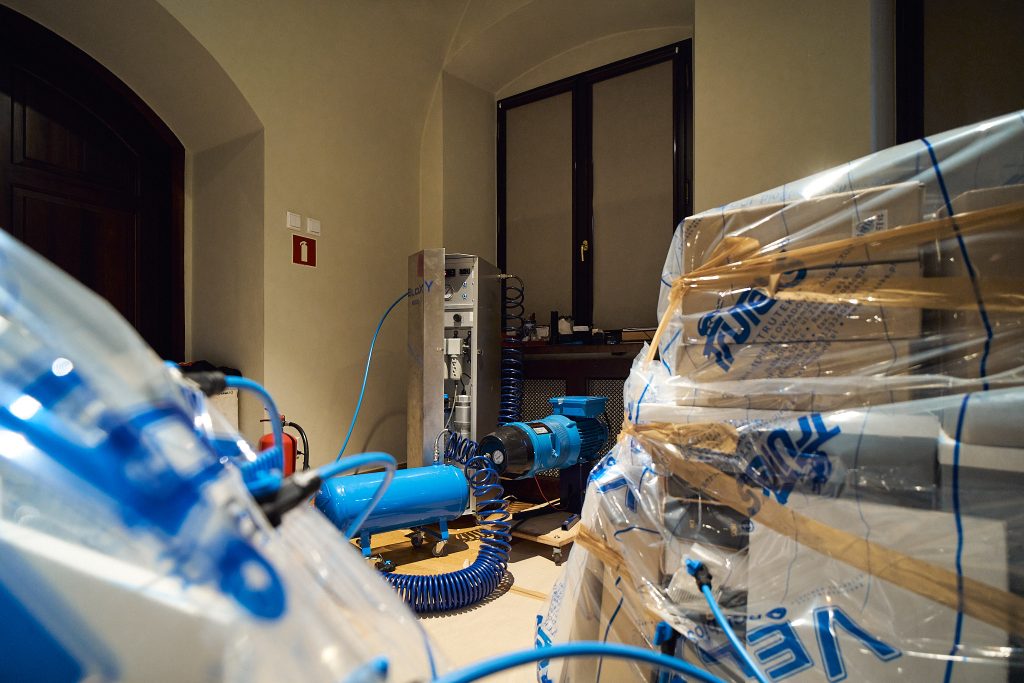
In addition, specialist equipment and tools for conservation and preventative maintenance work will be purchased in accordance with international standards, best practices, and, above all, drawing on many years of experience in the safe handling of museum objects. Equipment will be purchased for outdoor promotional activities, as well as accessories and equipment designed to improve accessibility for people with special needs.
5. Conservation of movable heritage, book collections or museum artefacts
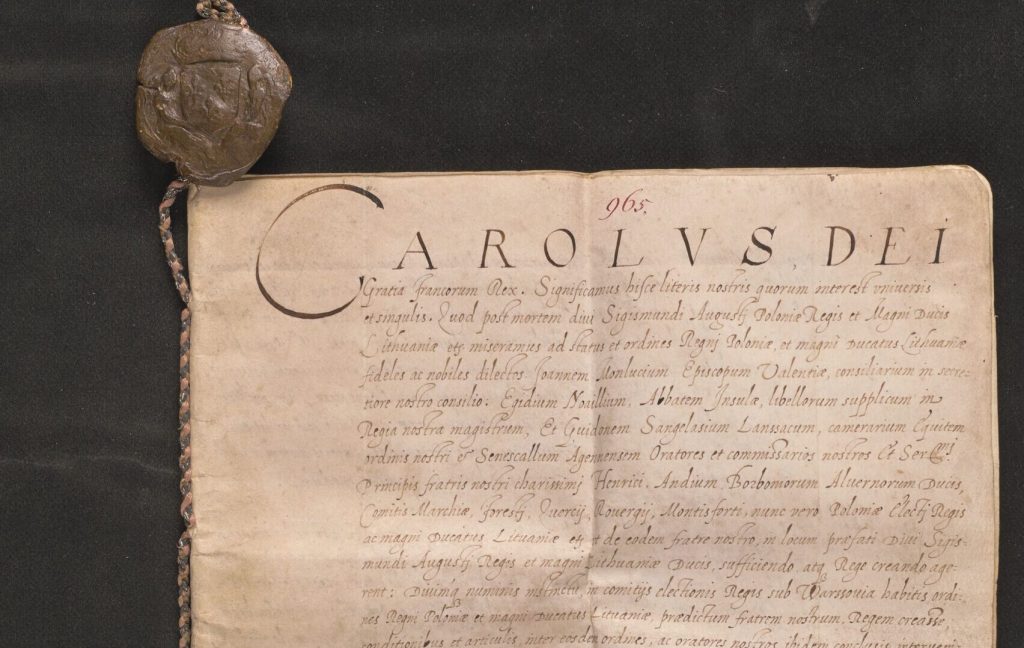
As part of the project, preventive and protective measures will be carried out on items from the MNK Czartoryski Museum’s collections. At the same time, items have been identified for full conservation. These constitute a unique group of historic artefacts. They have been selected due to their exceptional value to Polish culture and history. These include royal and papal documents, correspondence from the Library’s founders, Adam Kazimierz and Izabela Czartoryska, as well as other members of the MNK Czartoryski Museum, and first editions of Jan Kochanowski’s *Odprawa posłów greckich* and Adam Mickiewicz’s *Sonety*. The library also holds the three oldest printed works published on Polish soil in the 1470s, originating from the workshop of the itinerant German printer Kasper Straube (Franciszek de Platea, *Opus restitutionum*, St Augustine, *Opuscula*, Jan of Turrecrematy, *Explanatio*…). Among the particularly valuable items, mention must also be made of the so-called “Łaski Statute” – a collection of Polish laws and legal acts promulgated from the 14th century onwards, as well as sources of municipal law, compiled under the editorship of Jan Łaski at the behest of the Sejm of 1505.
6. Digitisation of movable heritage, book collections, museum artefacts and their online accessibility
As part of this project, in order to make the priceless collections of the MNK Czartoryski Museum more widely accessible, the Beneficiary intends to digitise and make 148 items available online. This will allow access to the collections for all interested parties, regardless of their place of residence, level of ability, etc. Furthermore, the digitisation of the exhibits will also serve to preserve them for future generations in a form untouched by the passage of time.
There are plans to expand and upgrade the existing digitisation studio at the MNK Czartoryski Museum. The expansion will be carried out based on the principles of compatibility between workstations and equipment, and the equipment procured will meet the highest quality standards and enable reproductions to be made in accordance with the guidelines adopted by the National Museum in Kraków.
7. Project management – indirect costs
8. Project preparation – indirect costs
9. Staff development for the beneficiary
As part of the project, the Museum has planned activities aimed at enhancing the skills of the Applicant’s staff. The training will cover 258 people – MNK employees on permanent contracts. Training sessions for staff are planned and will be conducted across a range of thematic areas, including: project management, diversification of funding sources, organisation of cultural activities, digital transformation, audience building and development, introduction of innovative forms of cultural participation, and customer service for people with special needs
10. Educational activities to raise public environmental awareness
The planned activities to be carried out during the project period will be educational in nature, aimed at raising public environmental and climate awareness.
Nature and environmental workshops are planned at the National Museum in Kraków. A series of family nature and environmental workshops will be organised during the project. An innovative format combining activities within the museum’s exhibition spaces with outdoor sessions in parks, gardens and courtyards located near or forming part of the National Museum in Krakow’s branches will allow for the flexible design of meeting formats and workshop topics.
‘The Museum and the Climate’
As part of future initiatives to raise awareness of social responsibility, the National Museum in Krakow plans to prepare and publish an environmental guide for the staff of the National Museum in Krakow.
11. Activities related to cooperation with partners from other countries
The National Museum in Krakow, within the scope of the MNK Czartoryski Museum’s activities, plans to engage in international cooperation across various fields. Among others, the Vilnius Library has been invited to collaborate as a partner in an international academic conference entitled “Prince Adam Jerzy Czartoryski – statesman, politician, émigré” (working title). A letter of intent has been signed with the Vilnius Library, which is attached to the application.
Conference dates: 28–30 May 2026, venue: National Museum in Kraków, MNK Sukiennice
Please be advised that you may report any suspected non-compliance of the Project or the Beneficiary’s activities with the KPON or KPP to the Managing Authority (MA) or the Intermediate Body (IB). Reports, notifications and/or complaints regarding the Project’s non-compliance with the provisions of the KPP/KPON may be submitted by individuals (project participants or their authorised representatives), institutions involved in the implementation of European Union funds, and civil society organisations (associations, foundations), using the following methods (in each of the following cases, the report is deemed to have been submitted in writing):
Total cost of the Project: PLN 56,194,788.50
Co-financing from the European Regional Development Fund: PLN 37,181,150.41
#EUFunds #EuropeanFunds