





 Sukiennice
Rynek Główny 3, 31-042 Kraków
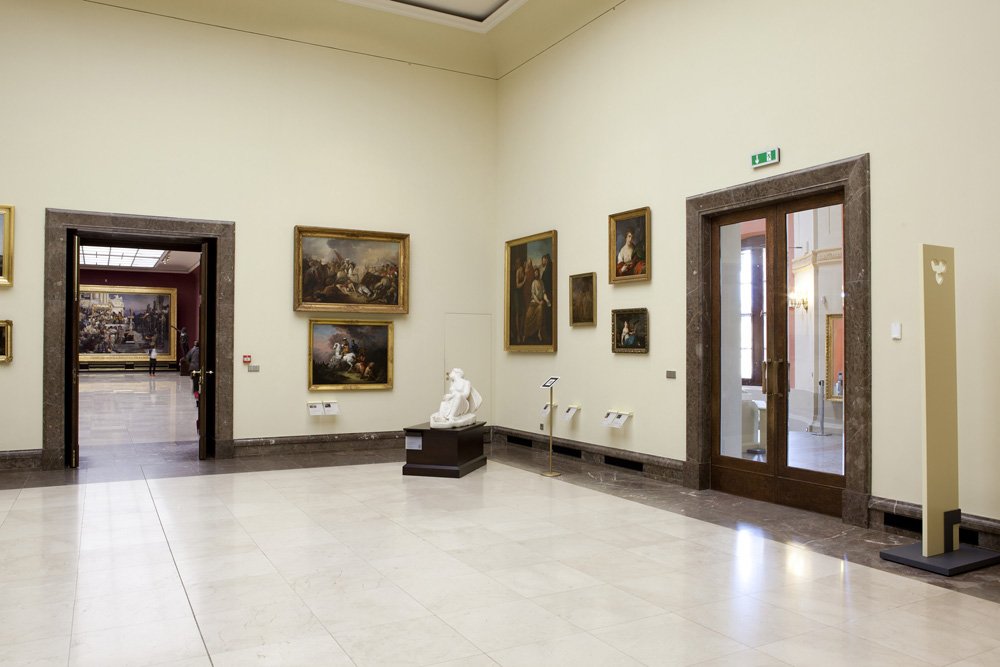
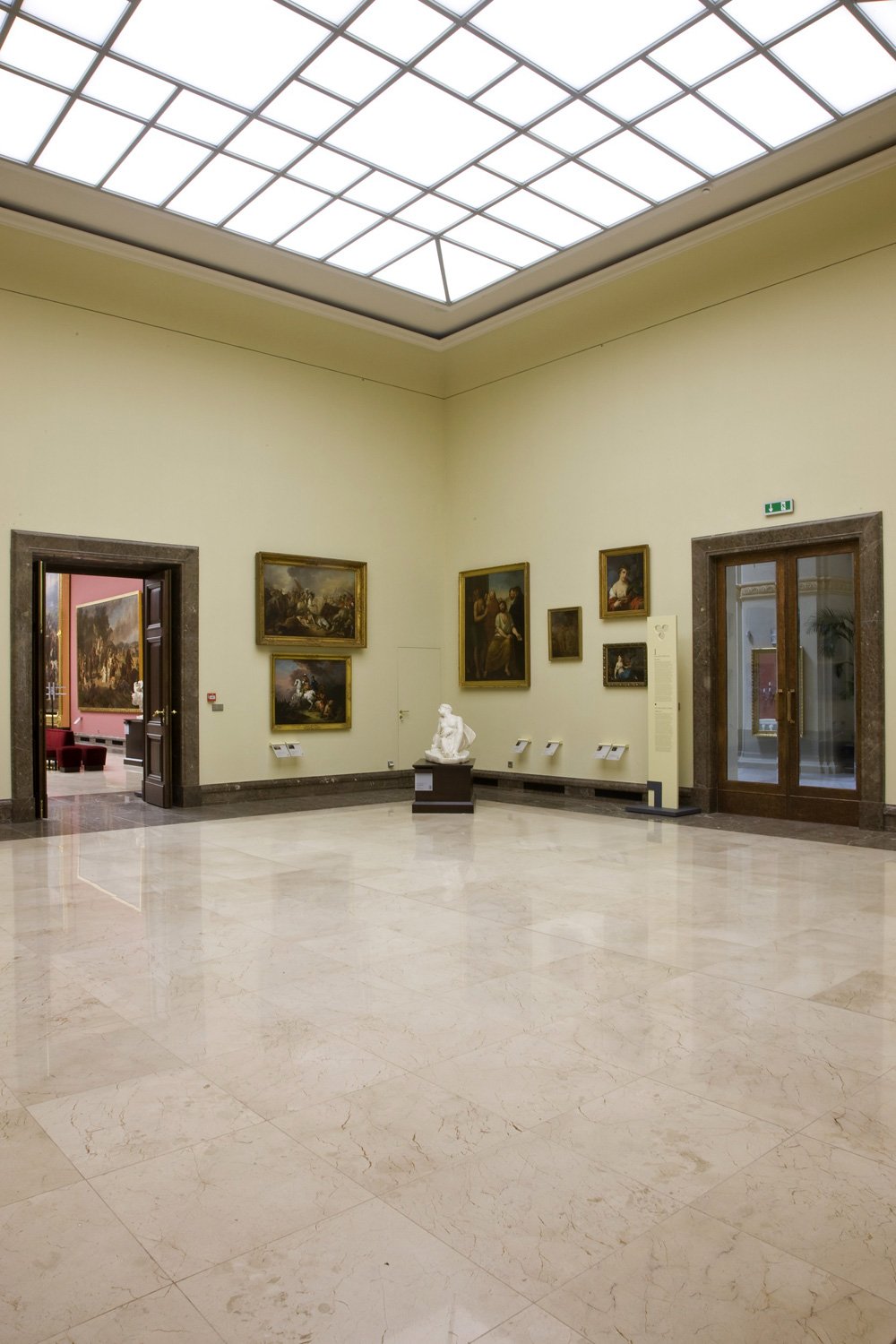
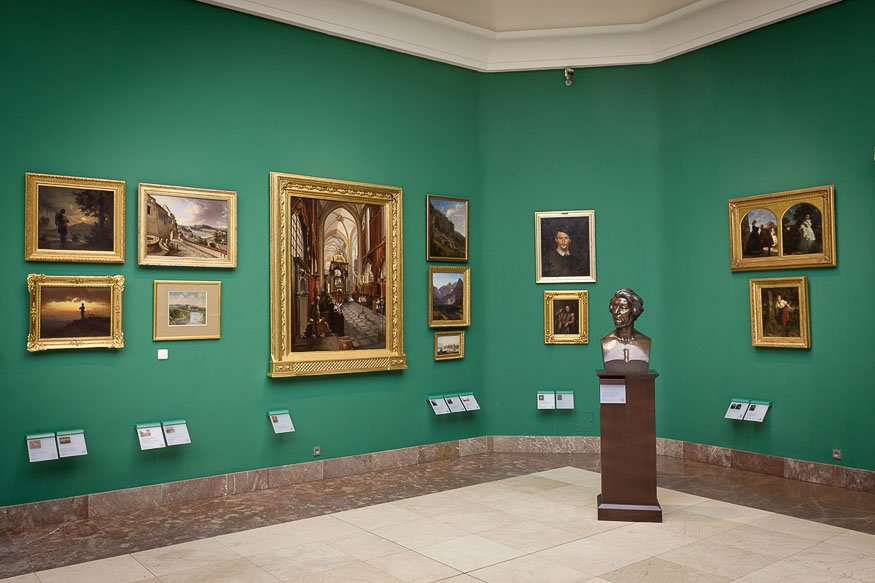
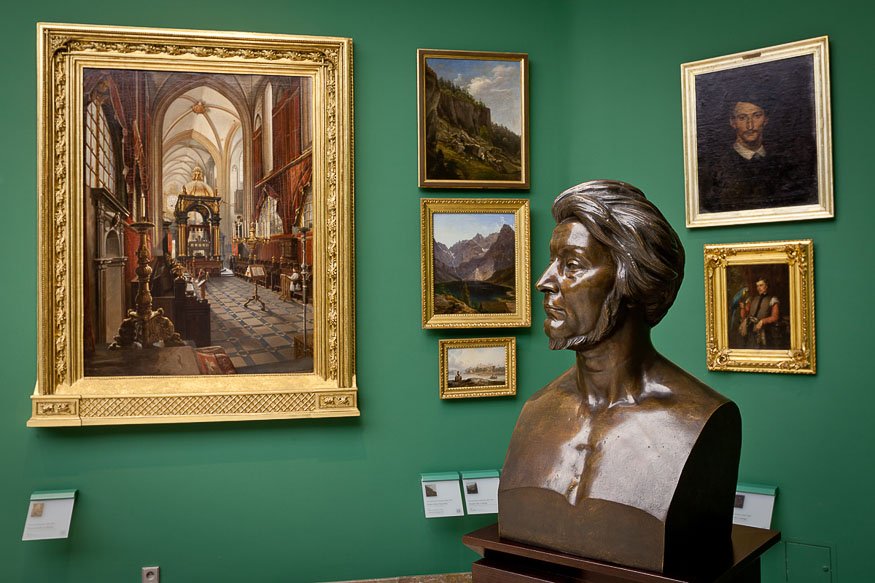
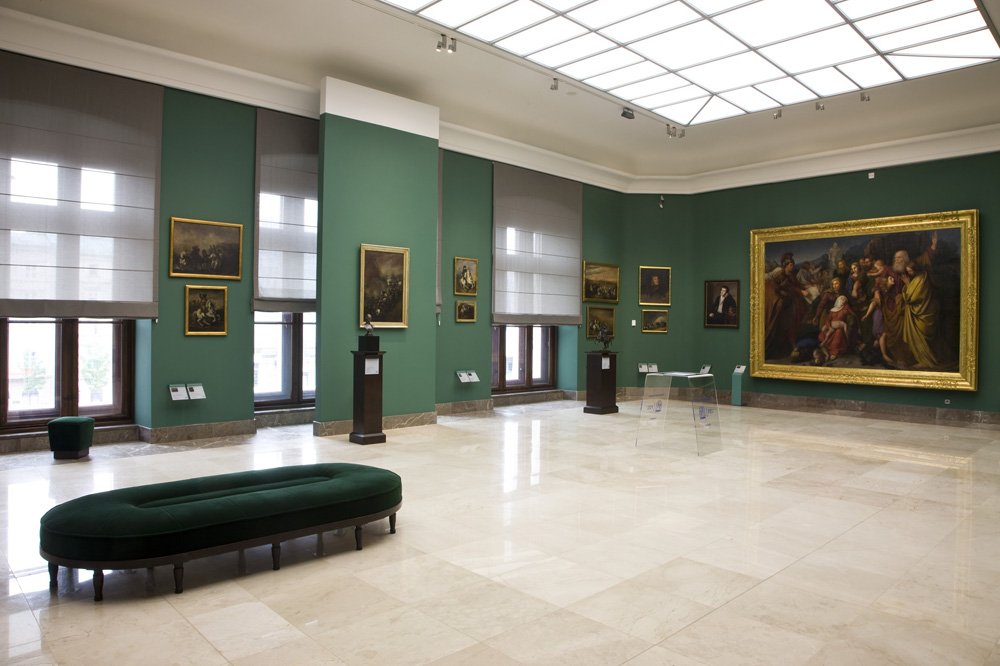
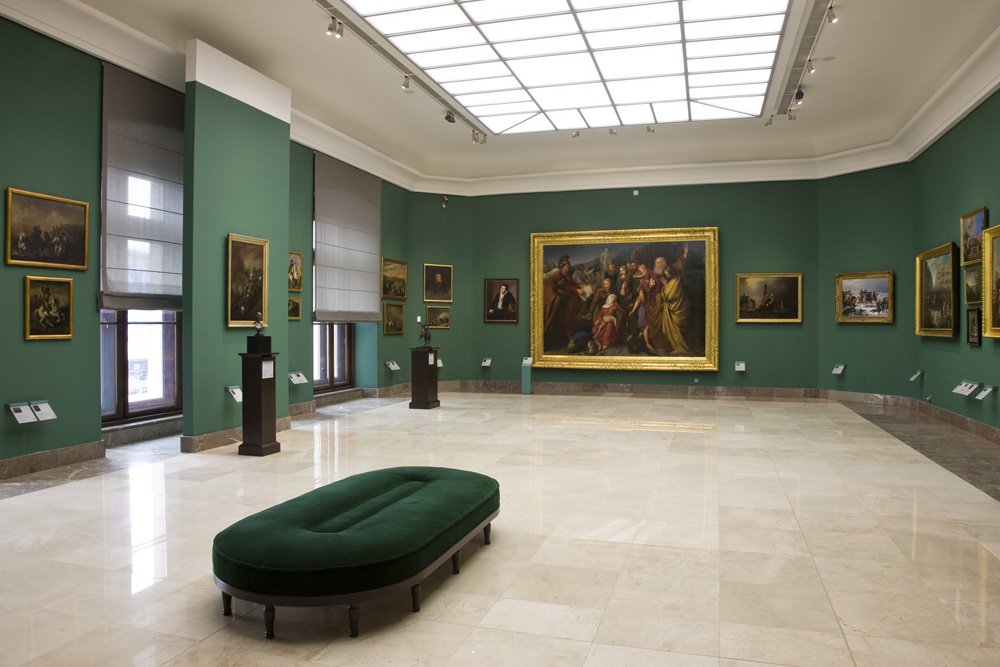
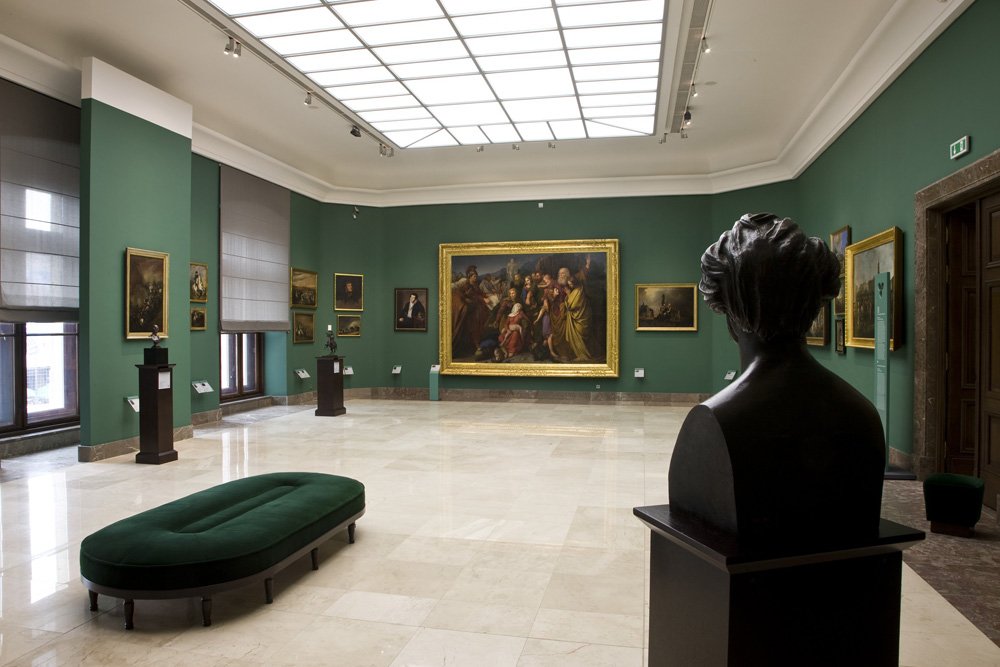
The Gallery of 19th-Century Polish Art is located in the rooms on the first floor of the Sukiennice (Cloth Hall), in the heart of Krakow’s Main Market Square. The spaces of the Cloth Hall were made available to the city’s community after its restoration and reconstruction between 1877 and 1879.
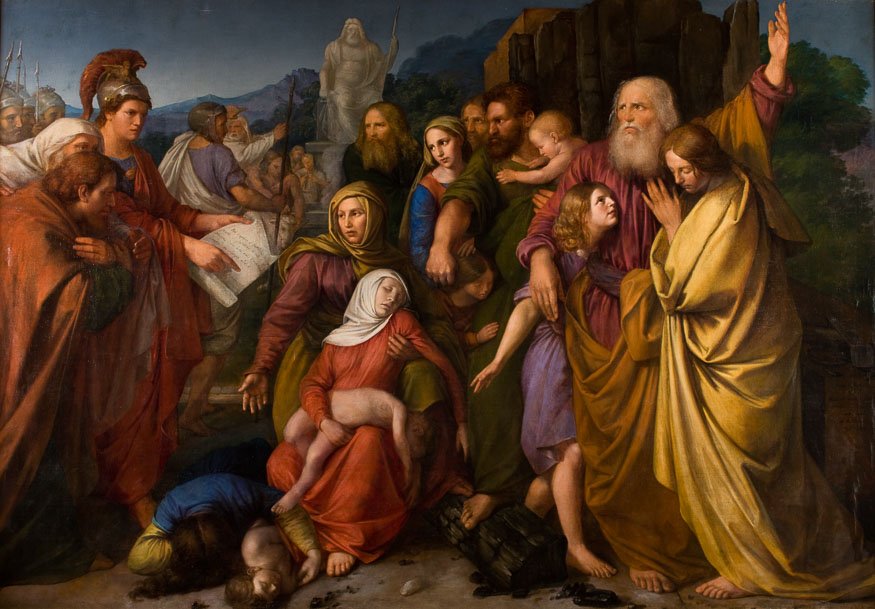
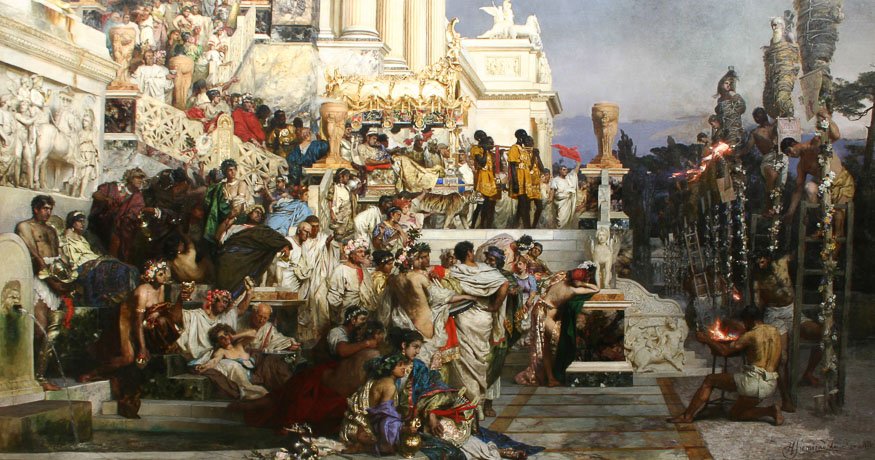
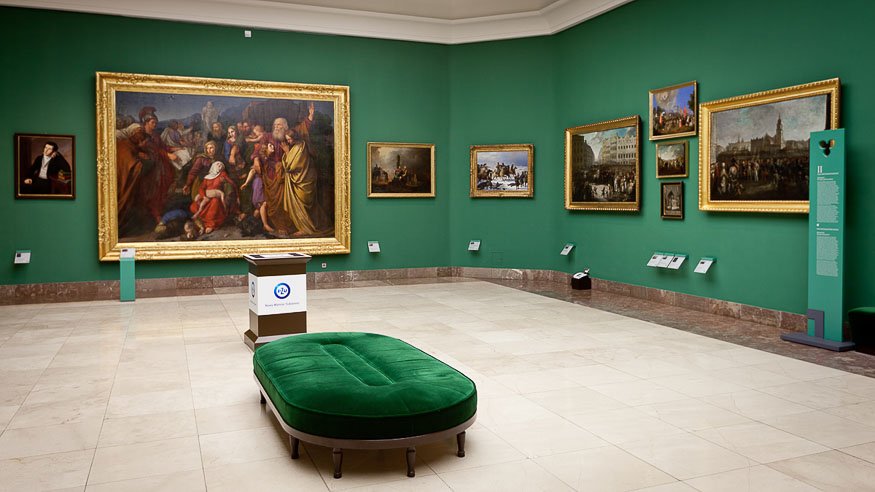
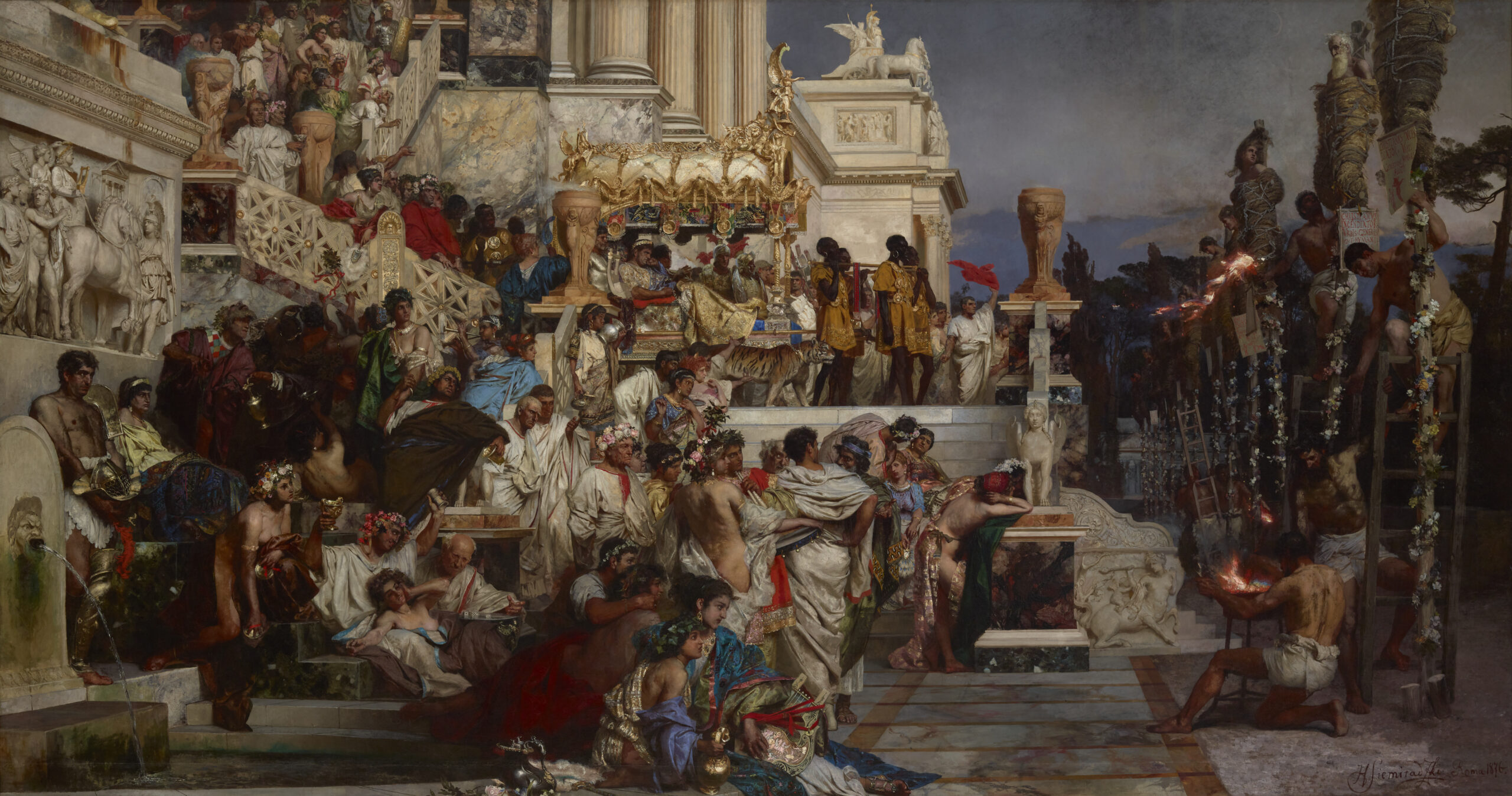
In 1879, the 50th anniversary of Józef Ignacy Kraszewski’s creative work was celebrated in the interiors of the Sukiennice. During the ceremony, the famous gesture of the painter Henryk Siemiradzki took place. He donated his painting Nero’s Torches [„Pochodnie Nerona”] to the public as the founding piece of the newly established National Museum.
The monumental Nero’s Torches shows a scene from the history of the persecution of the first Christians. The work was created by the artist at a time when Poland did not exist on maps. Due to the theme and the story presented on the canvas, the painting aroused strong emotions among the audience. This emotional impact was even greater as the painting became the founding piece of a new collection, which was soon joined by several dozen works from other contemporary artists inspired by Siemiradzki. From that moment on, we follow the history of the National Museum—an institution that acquires contemporary art and actively engages with important issues in public discourse.
The layout of the Gallery’s rooms corresponds to the periods in 19th-century art, which are respectively patronized by: Marcello Bacciarelli, Piotr Michałowski, Henryk Siemiradzki and Józef Chełmoński.
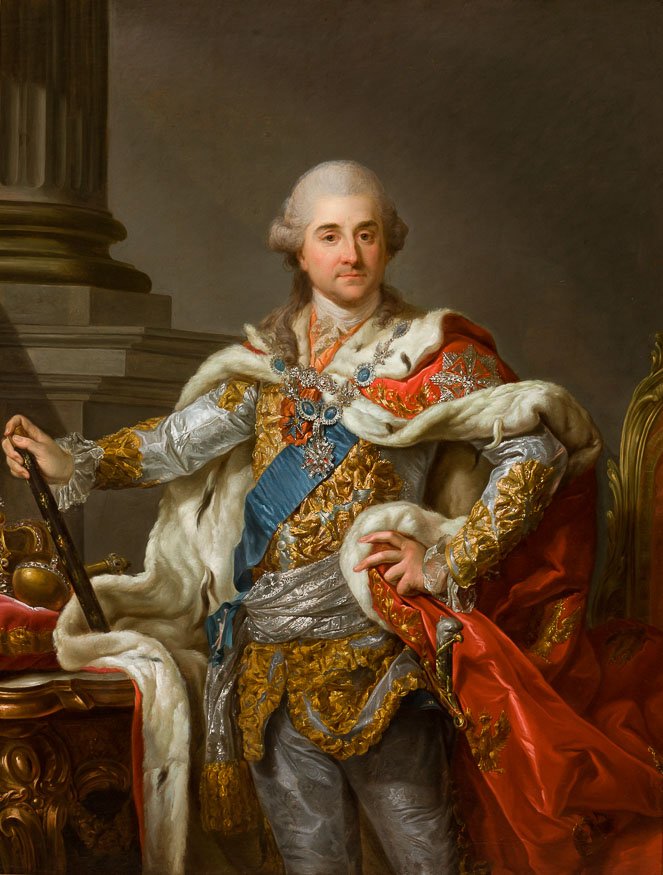
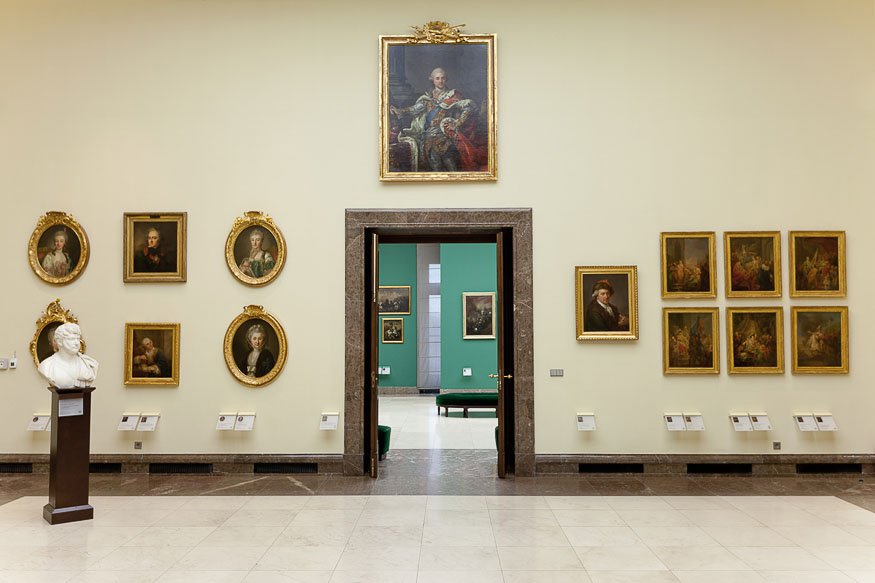
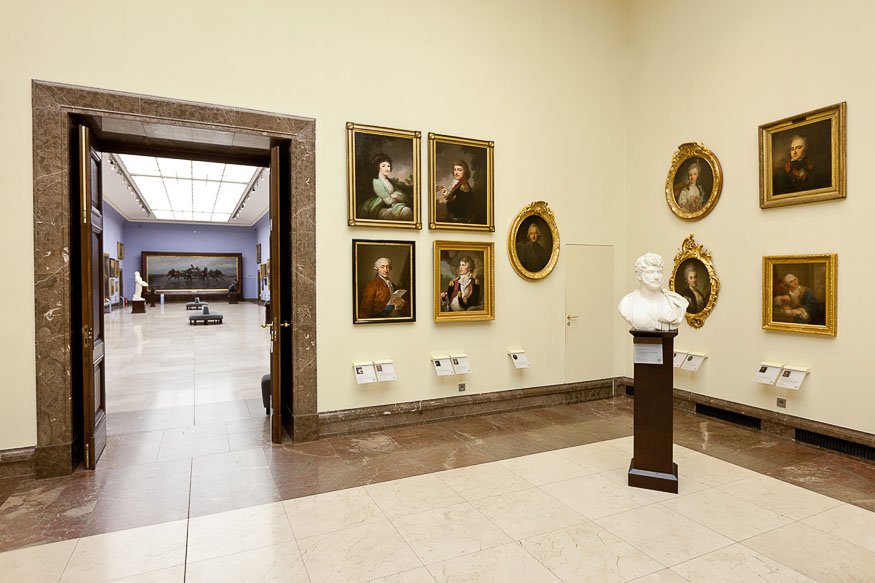
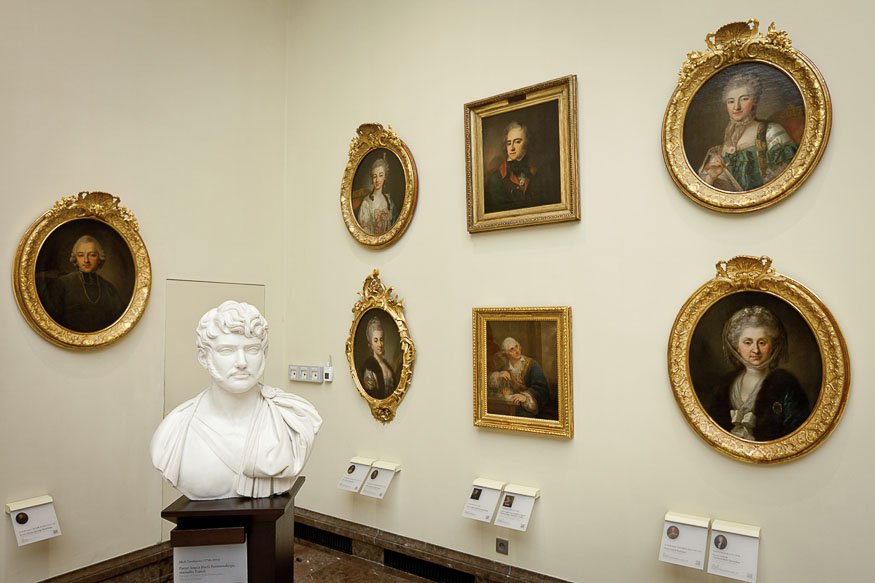
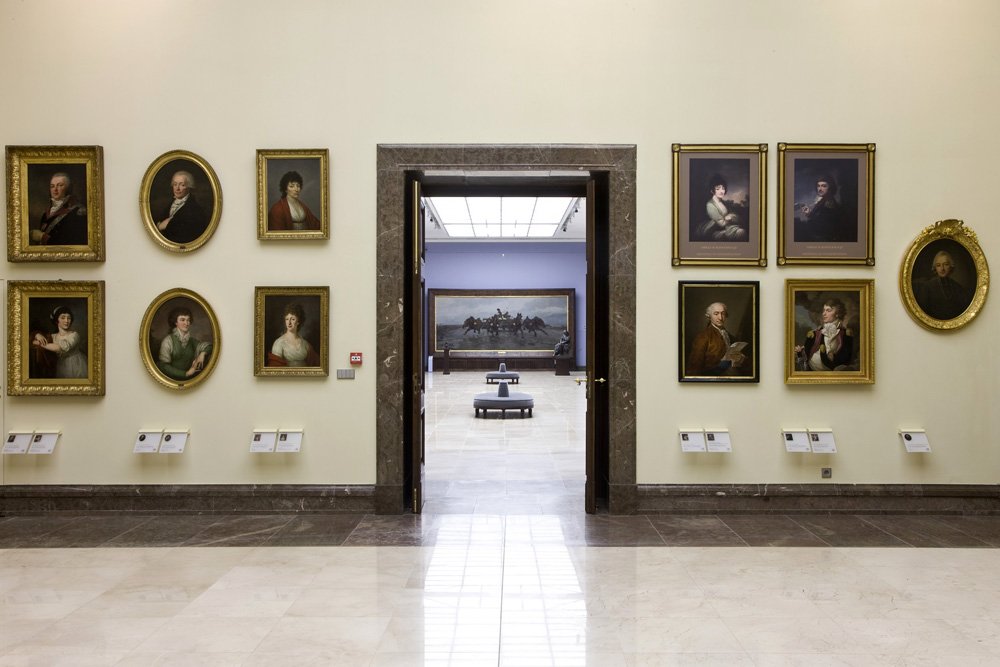
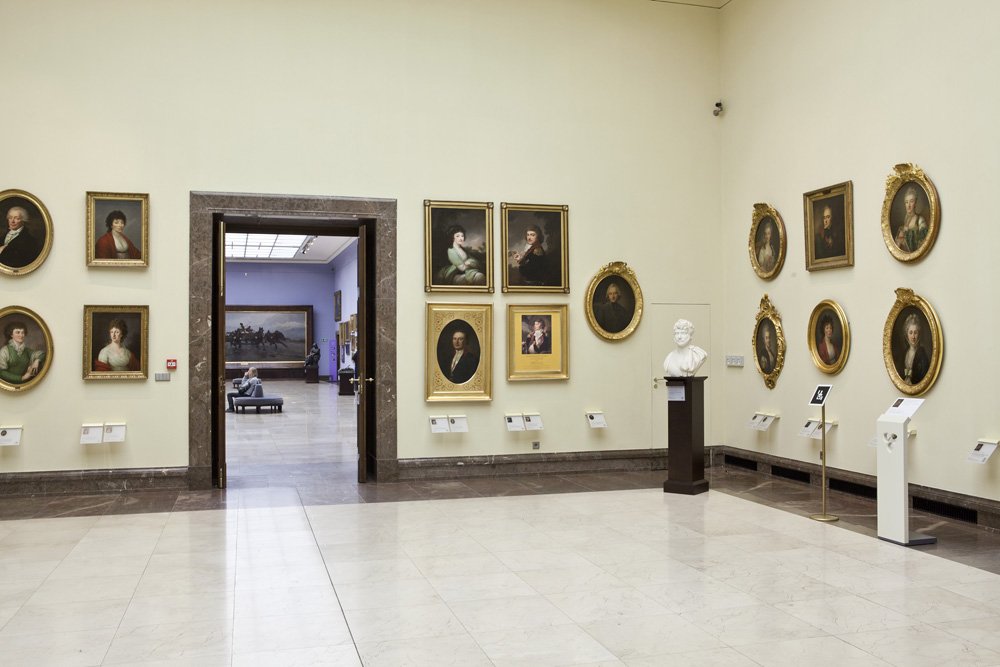
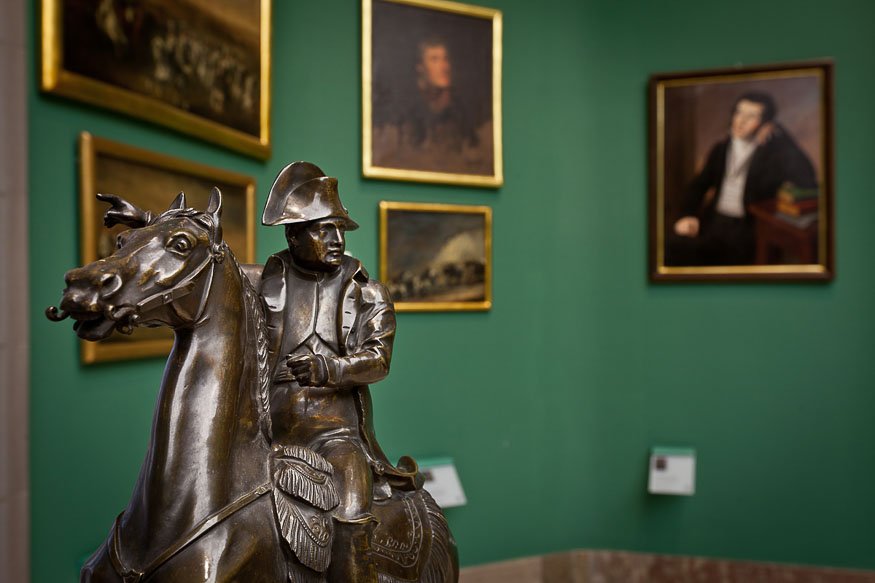
The Bacciarelli Room displays painting and sculpture from the Enlightenment era, in the trends of late Baroque, Neoclassicism, and Sentimentalism. It shows the stylistic pluralism of artists working under the patronage of the King of Poland, Stanisław August Poniatowski. The subject of the works of art created along his path ranged from a portrait and allegory to representations of historical events, crucial for the history of the Republic of Poland.
We get to know them through the approach of artists such as: Marcello Bacciarelli, Józef Grassi, Jan Chrzciciel Lampi, Aleksander Orłowski, Jan Bogumił Plersch, Franciszek Smuglewicz, Jakub Tatarkiewicz.
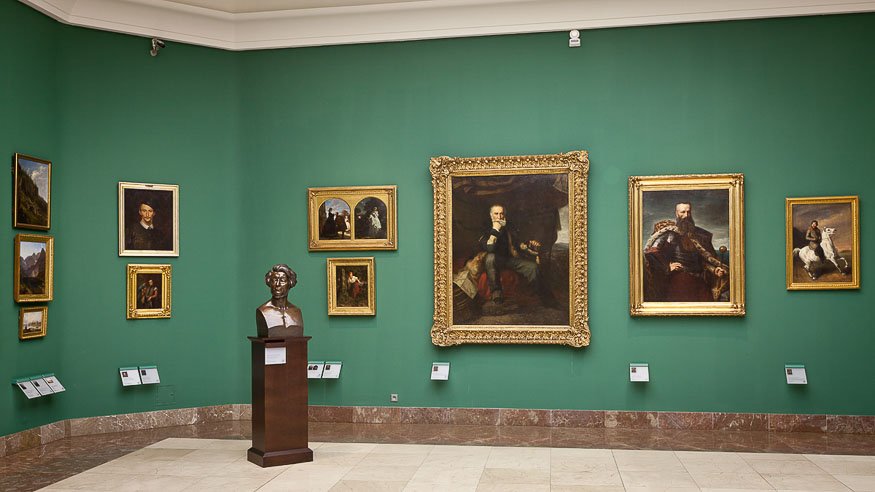
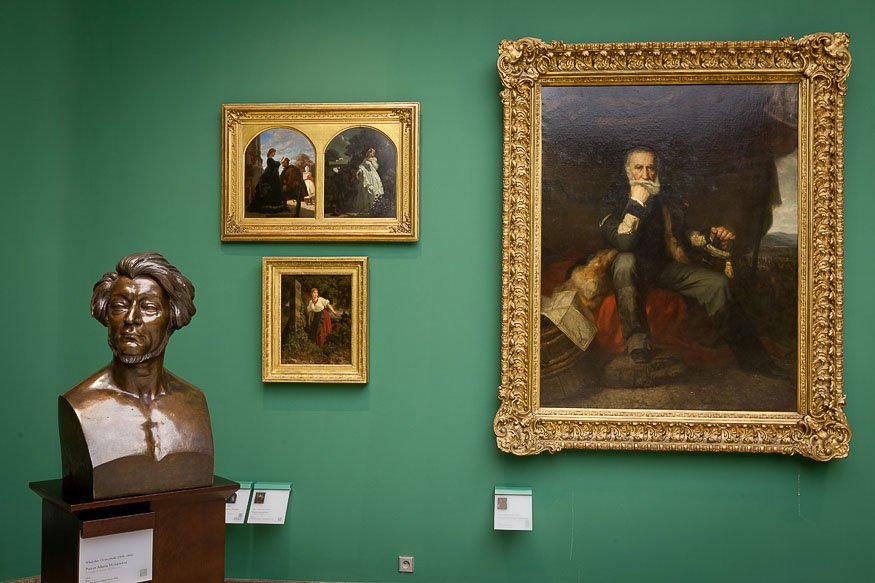
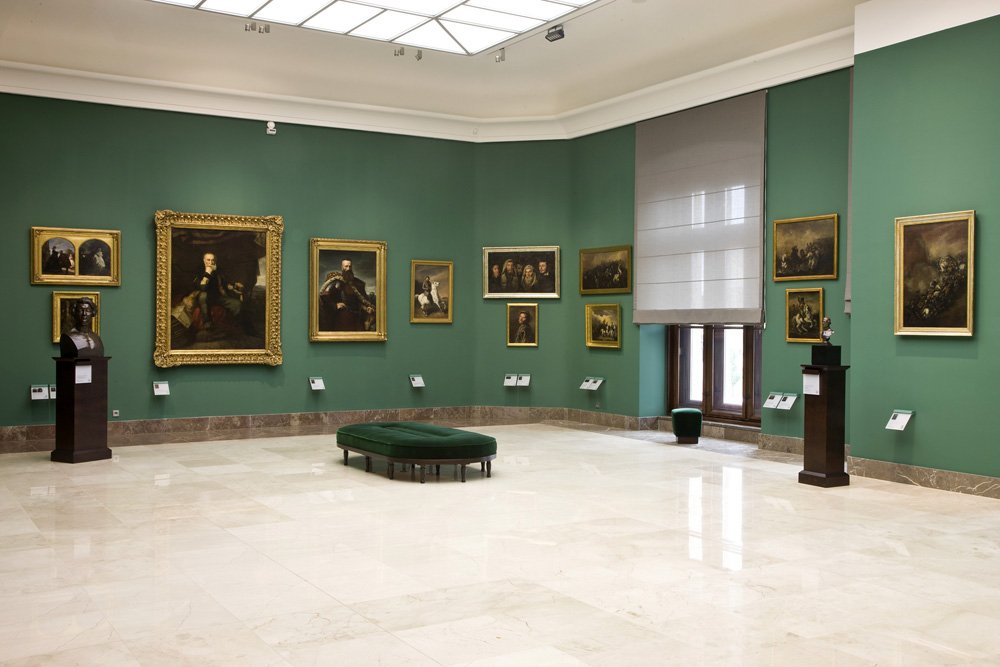
Romanticism in painting is a phenomenon covering the period from the end of the 17th century to the middle of the 19th century. As in the case of the same tendencies throughout Europe, it was not limited to one aesthetic, it was characterized by thematic and stylistic diversity. In the Polish lands, the Romantic movement was firmly rooted in dramatic historical events: the fall of the state and, subsequently, the repeated uprisings aimed at regaining independence.
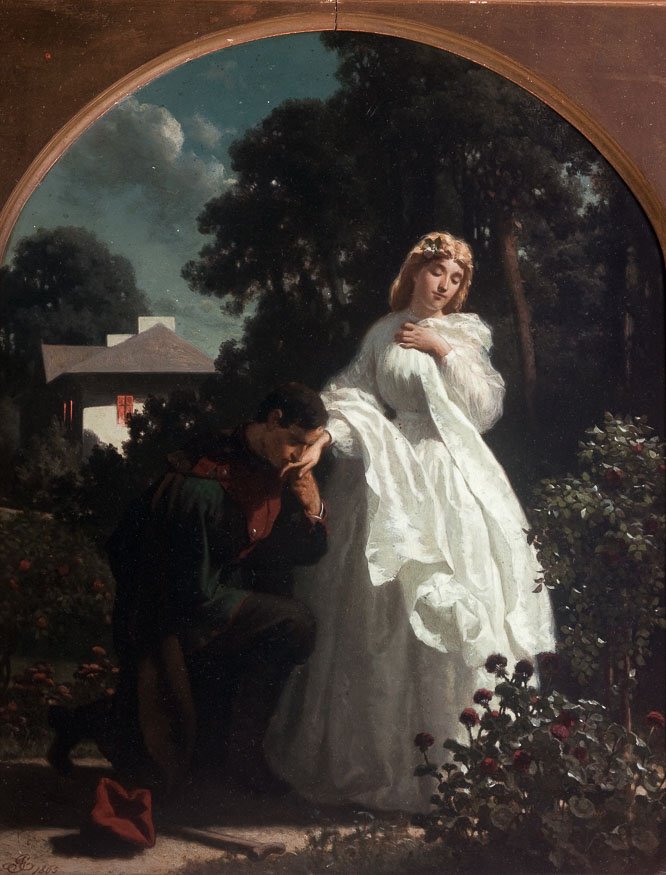
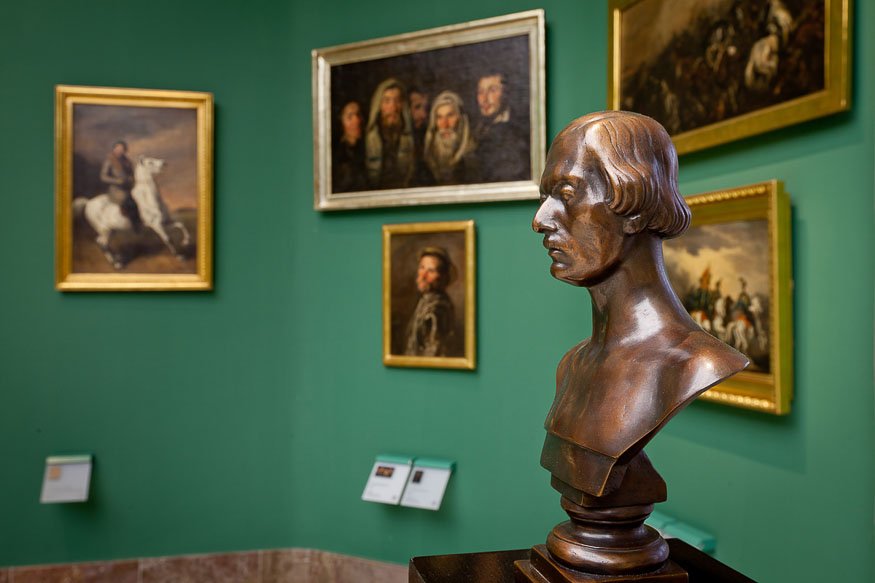
There are paintings and sculptures created by artists: Artur Grottger, Leon Kapliński, Piotr Michałowski, Henryk Rodakowski, Józef Simmler, Wojciech Korneli Stattler, Michał Stachowicz, Teodor Baltazar Stachowicz and Józef Suchodolski.
Somosierra by Piotr Michałowski, the scene of the battle on the mountain pass, is an image bearing the most important threads of the era: the fight for freedom and ideals, lonely heroism, brotherhood of arms and patriotism. Romantic moodiness in Polish art is intertwined with the intense experience of the Napoleonic Wars, national liberation struggles, and uprisings in which various social classes participated.
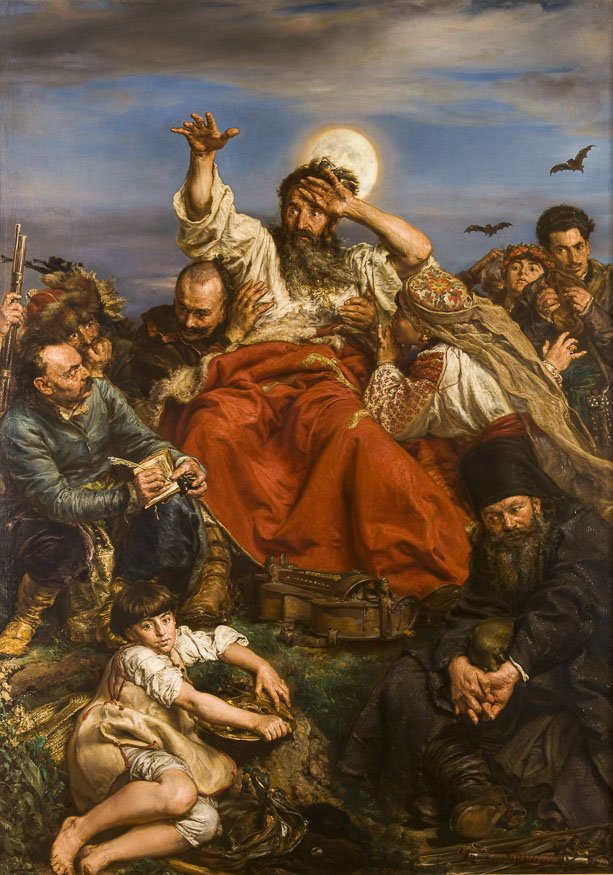
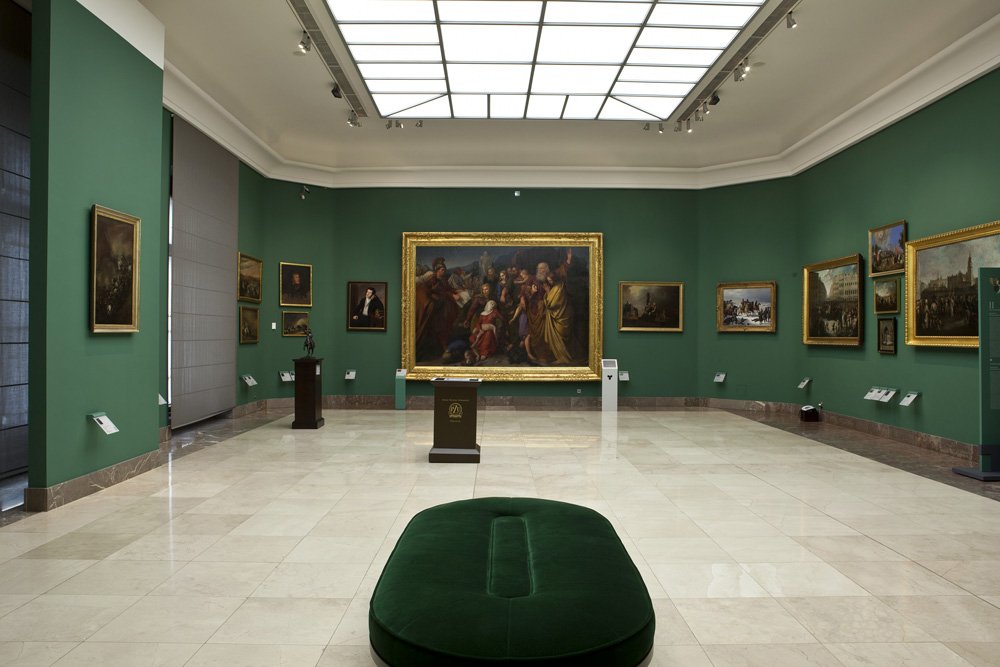
Academies and art salons in the second half of the 19th century brought together artists who created art that uniquely moved the imagination of the audience. It was within their circle that monumental canvases were created: Nero’s Torches by Henryk Siemiradzki and Kościuszko at Racławice [„Kościuszko pod Racławicami”] by Jan Matejko. This was a time when an academic hierarchy of topics determined the success of a work of art, distinguishing “history” (biblical scenes or events from the history of the nation), portrait, genre scenes, landscapes and still life.
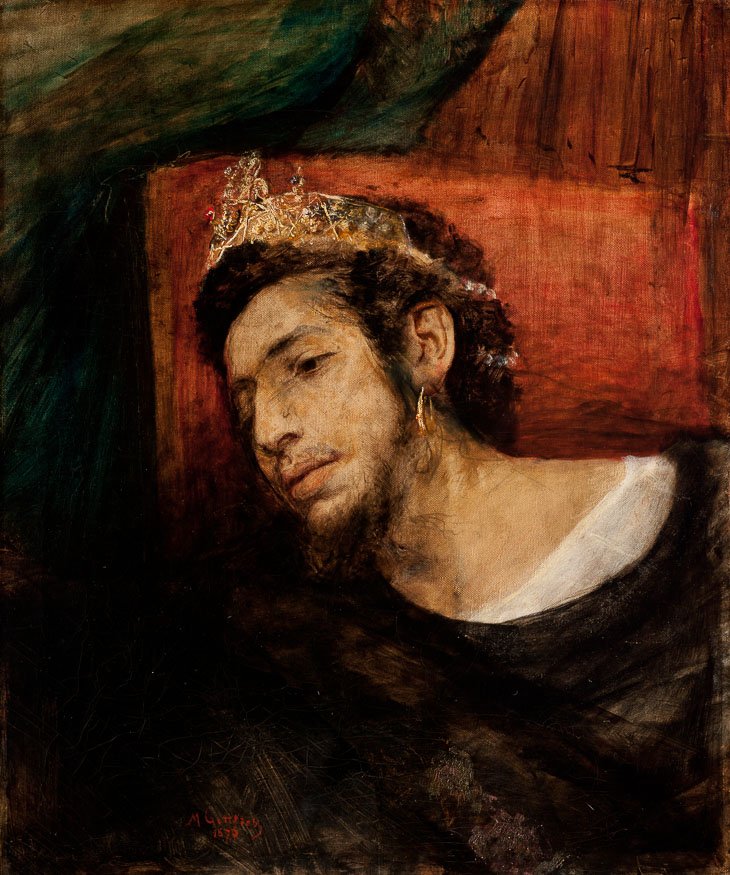
In the Siemiradzki Room, there are works by: Tadeusz Ajdukiewicz, Kazimierz Alchimowicz, Feliks Cichocki-Nałęcz, Wojciech Gerson, Hipolit Lipiński, Jan Matejko, Jacek Malczewski, Maksymilian Antoni Piotrowski, Witold Piwnicki, Pius Weloński, and others.
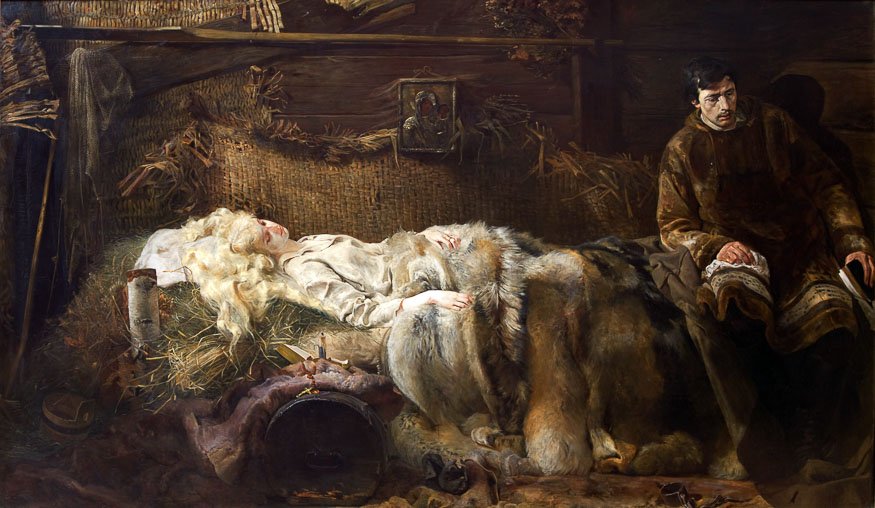
The layout of the gallery of 19th-century Polish art is conducive to learning about the work of subsequent generations of artists. Neighbouring Jan Matejko’s Wernyhora and Jacek Malczewski’s Death of Ellenai[„Śmierć Ellenai”], point to the richness of artistic and cultural associations surrounding the rediscovered Polish historical painting, extending slightly into the future under the influence of late 19th-century Romantic symbolism.
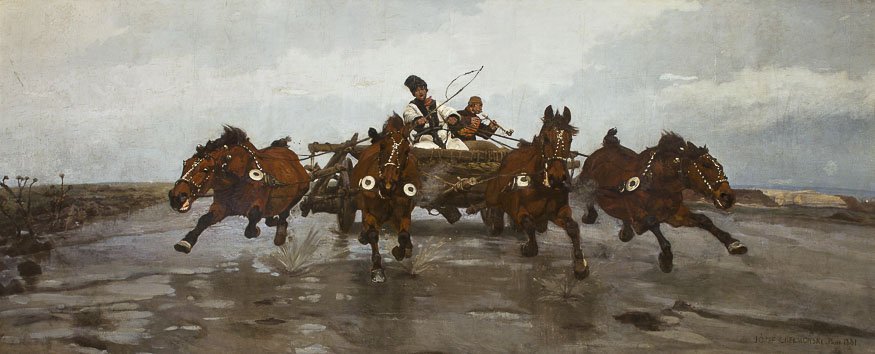
Realism, Polish Impressionism, and the beginnings of Symbolism are the themes of the artworks displayed in the Chełmoński Room, the final section of the exhibition at the Sukiennice. The various trends are organized around visual and ideological dominants, with the most prominent being Four-in-Hand [„Czwórka”] by Józef Chełmoński—a monumental painting located at the end of the room’s axis, depicting a galloping horse team racing toward the viewers.
Realistic tendencies in 19th-century Polish art developed in the circle of the Warsaw School of Fine Arts and Drawing Class. This group included: Rafał Radziewicz, Franciszek Kostrzewski, Wojciech Gerson, Henryk Pillati and Józef Szermentowski.
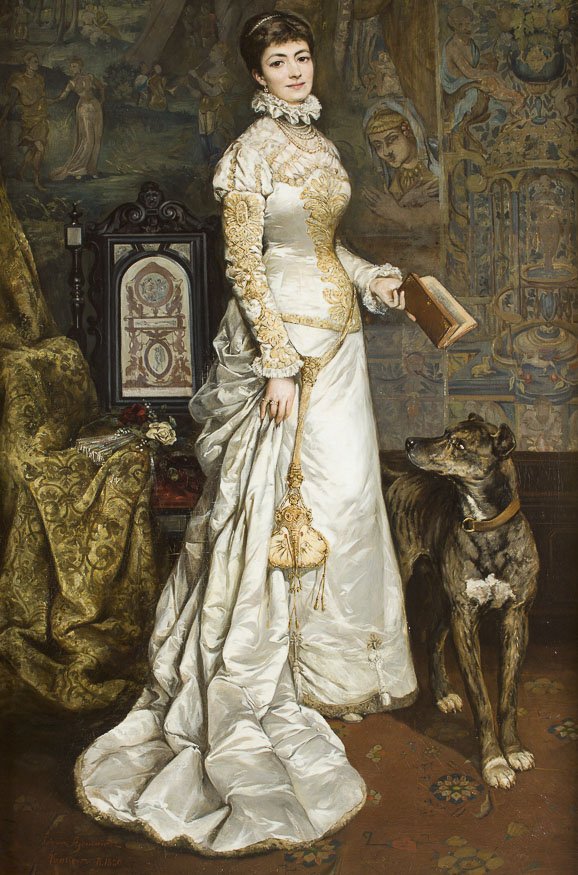
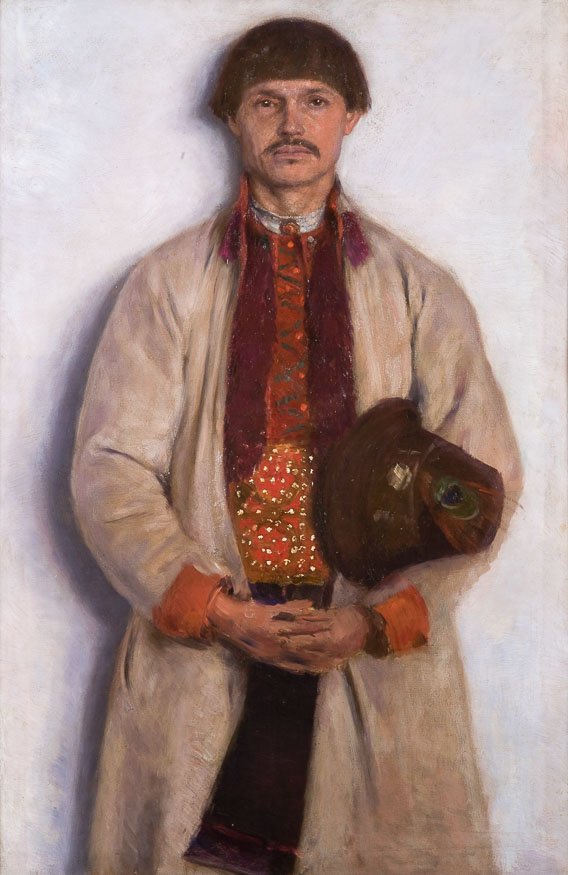
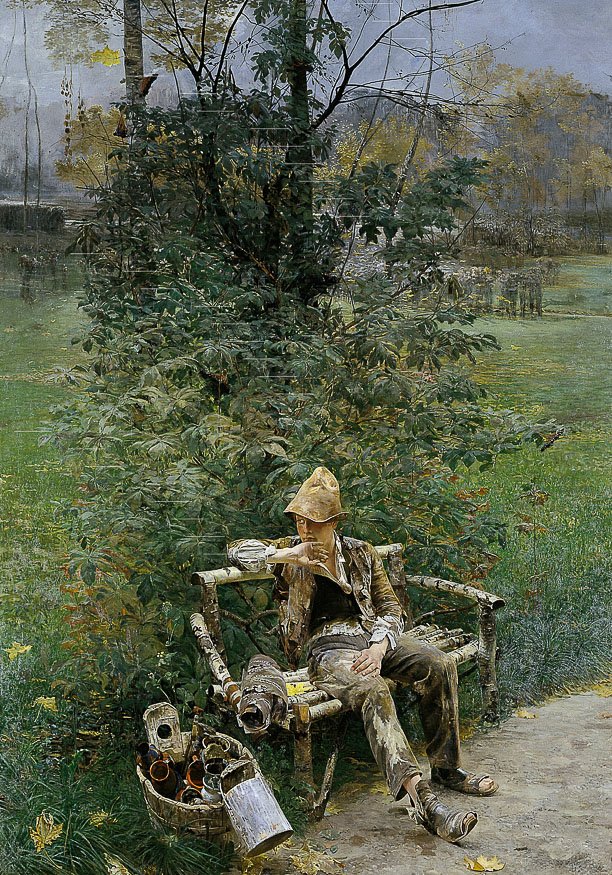
Genre painting – depicting the everyday life of the squirearchy, bourgeoisie, and peasants – was seen by the artists as the art of the moment, perfectly reflecting their era. The interest in the people and their customs was manifested in various forms and approaches: analytical, social, seeking picturesqueness and symbols. These different approaches are represented by: Józef Brandt, Aleksander Kotsis, Franciszek Kostrzewski, Witold Pruszkowski and others.
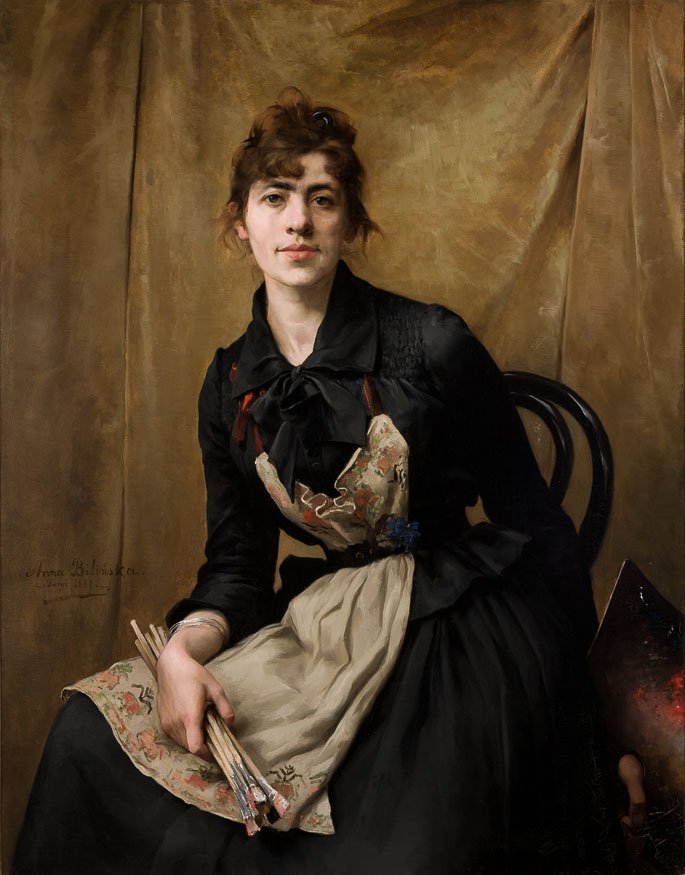
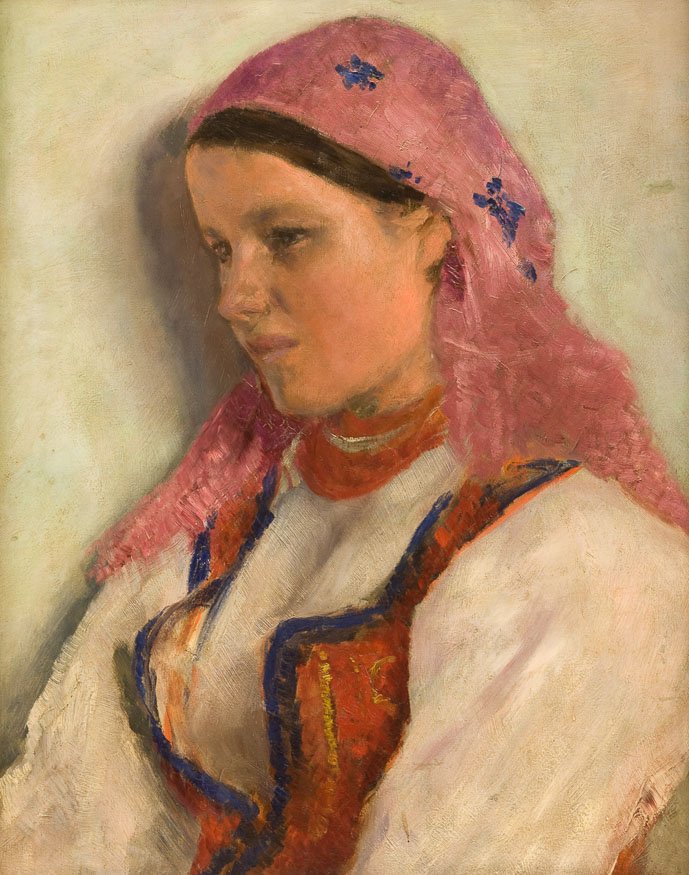
In times of developing realistic tendencies in art, the portrait lost the features of formality, becoming an intimate, psychological image of the portrayed person, or oneself, as in the Self-Portrait of Anna Bilińska-Bohdanowicz.
The Chełmoński Room houses paintings by Polish landscape artists educated in Munich and Paris, shaping the creative environments of Krakow and Warsaw. In their painting, animalistic, battle, and oriental motifs appear, with a key emphasis on painting technique and composition. This focus on these aspects of the artwork arises from following new trends in Western art, incorporating the achievements of Impressionism, Art Nouveau, and Symbolism into their creative language. It is here that the works of the Gierymski brothers, Jan Stanisławski, Józef Pankiewicz, Władysław Podkowiński and Leon Wyczółkowski meet.
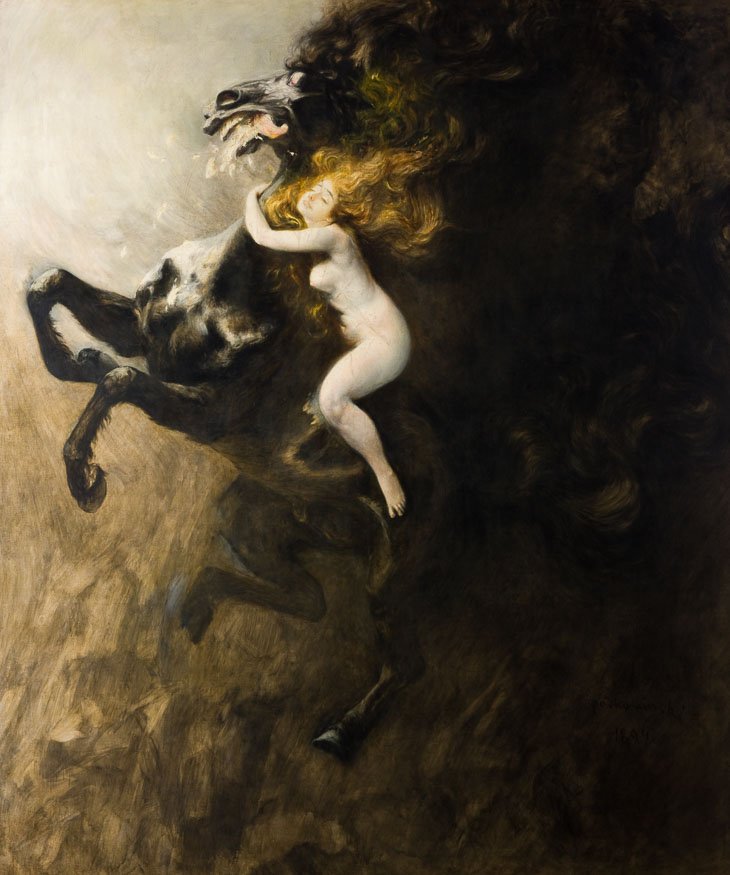
The paintings Introduction [„Introdukcja”] and Inspiration of the Painter [„Natchnienie malarza”] by the painter Jacek Malczewski, as well as the neighbouring Ecstasy [„Szał”] by Władysław Podkowiński, foreshadow what will unfold in the art of the next century: symbolic themes, expression, and the continued search for forms of expression. These are the themes explored in the 20th and 21st-century Polish Art Gallery at the Main Building of the MNK.














 Sukiennice
Rynek Główny 3, 31-042 Kraków