





 MNK Szołayscy
pl. Szczepański 9, 31-011 Kraków
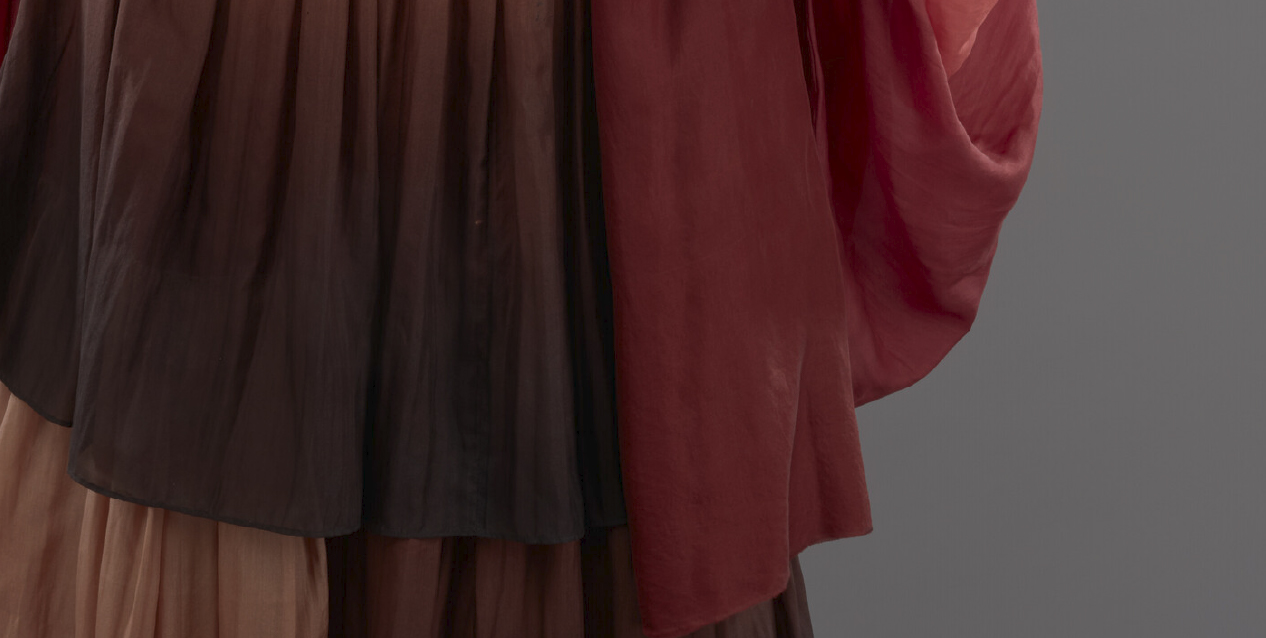
At another exhibition of the achievements of “Polish Fashion” [Moda Polska], the National Museum in Kraków presents a selection of garments from three outstanding designers: Kalina Paroll, Magda Ignar and Jerzy Antkowiak.
The earliest dress on show, designed by Kalina Paroll in 1969, exudes subtle elegance. The designer paired a smooth velvet top with a densely pleated skirt. The counterpoint to this simple combination is the rich, glossy, three-dimensional embroidery — a piece of authentic decoration from the inter-war period. The juxtaposition of the new with the old was part of the designer’s regular repertoire of artistic means.
For many years, Kalina Paroll was responsible for the cooperation with the silk factory in Milanówek, which had been in operation since 1924, originally as the Central Experimental Sericulture Station. After the Second World War, the station was nationalised and renamed the State Central Silk Works “Milanówek”. The fabrics used in the “Polish Fashion” collections were hand-painted in the Milanówek “paint shop”. The nature of the patterns and their arrangement were determined by the designers together with the painters employed here on a permanent basis. Such collaboration resulted in extremely striking creations, such as the “Butterfly” ensemble, inspired by stained-glass windows by Stanisław Wyspiański and Józef Mehoffer, and a green evening gown with a landscape motif of a pond, swans and a giant butterfly. One of the most interesting outfits is a set inspired by gypsy culture, consisting of a ruffled skirt and a loose-fitting blouse with extra-wide sleeves, sewn from pieces of hand-shaded silk.
Elegance with a touch of provocation is represented by Magda Ignar’s designs. One of the best examples is the unobtrusive gown in black velour — seemingly “polite”, coming up to the neck, but… above the waistline, the velour was replaced by a partially transparent gauze, provocatively exposing the nakedness of the left breast.
The exhibition also includes formal and evening designs by Jerzy Antkowiak — from classics, in the style of dignified elegance sought-after by the clients of “Polish Fashion”, to avant-garde pieces, reflecting the designer’s sense of humour and his great love of theatre. We show two versions of women’s outfits from the 1990s with short trousers instead of skirts: a formal set of green wool and a wild green-and-gold ball gown. Short trousers in this context mainly appeared on the catwalks, in the collections of major designers.
Two large and warm skirts designed by Jerzy Antkowiak also catch the eye. One of them comes from the 1983 anniversary collection. At the time, the Polish economy was in such a deplorable state that even “Polish Fashion” — for the communist authorities, a showcase of the success of the Polish clothing industry — had serious trouble procuring the right fabrics for its seasonal collections. Warm sets from the 1983 collection were described in the “Polish Film Chronicle” as “Queue outfits. Warm and made for long waits.”
The exhibition would not be complete without the “Polish Fashion coat” — coveted by many Polish women and a symbol of good quality and luxury in the reality of communist Poland.
We hope that visitors will be fascinated by the variety of styles created by “Polish Fashion” designers, from the late 1960s to the 1990s.
MNK Szołayscy
pl. Szczepański 9, 31-011 Kraków