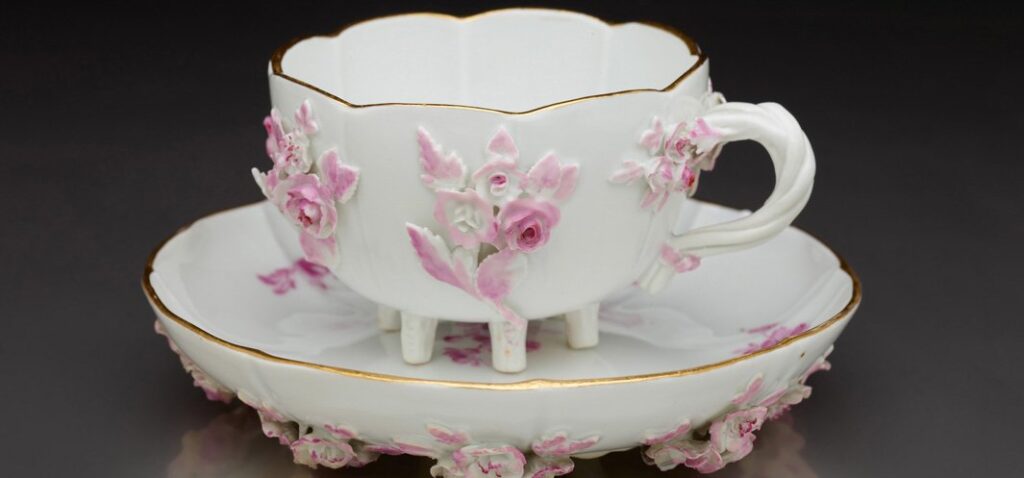
The number and variety of exhibits, including numerous examples of exceptionally valuable and rare artefacts, place the collection of the Department of Arts and Crafts, Material Culture and Military Artefacts at the National Museum in Kraków among the foremost collections of arts and crafts in Poland. The objects in the collection span all historical periods – from antiquity to the present day. They include artefacts from the territories of Poland within its changing historical borders, examples of European art, as well as objects from the Near and Middle East. Many of the foreign artefacts are linked to Polish history. The collection of decorative arts at the National Museum in Kraków was formed mainly on the basis of donations from renowned collectors and modest collectors alike. The collection as a whole superbly illustrates the fundamental development of Polish material culture. The vast collection has been divided into several collections with corresponding sub-sections. These are:
The collections of goldsmithing, gemogliptyka, furniture, glass (including glass painting), clocks, and precision and measuring instruments are among the most important in Poland. The exhibition of goldsmithing artefacts is an exceptionally diverse selection, comprising sets of liturgical and secular silverware (including Judaica), cutlery, enamel-decorated objects, jewellery and clothing accessories. The collection of gemmoglyphics, comprising 3,300 exhibits, includes cylinder seals, scarabs, magical gems, and Greek and Roman intaglios and cameos. The unique sets of various types of Polish and foreign furniture on display date from the 15th to the end of the 20th century. Particularly noteworthy is the collection of small furniture pieces created in the 17th and 18th centuries. The glass collections encompass artefacts ranging from the Roman Empire to contemporary artistic works from the early 21st century. Among these, a collection of stained-glass panels from the 13th to the 15th century—on loan from the Dominican Church of the Holy Trinity in Kraków—and a collection of 18th-century Polish Baroque glassware hold a special place. The Department possesses all types of mechanical clocks, including various kinds of table, wall, mantel and cabinet clocks, made between the 17th and the mid-20th centuries. This is the richest and most representative collection in Poland.
The collection of textiles and clothing comprises 25,000 items. The exhibition features costumes and fashion accessories, liturgical vestments, clothing and upholstery fabrics, as well as fabrics used for interior decoration. The secular garments on display, together with their accessories, illustrate changes in fashion from the 18th century to the present day. The pride of the collection are rare kontusz garments with sashes, dating from the 17th to the 19th century. An important part of the collection is the rich collection of Jewish textiles and clothing. Among the clothing and upholstery fabrics, the most numerous are Italian, French, Persian and Turkish silks, as well as Florentine velvets from the 15th and 17th centuries. Among the decorative fabrics, a large collection of carpets—Persian, Turkish, Turkmen, Caucasian and Polish—deserves special attention.
The ceramics collection comprises over 11,000 artefacts, ranging from Romanesque floor tiles and medieval vessels to works by Kraków-based ceramic artists created in the early 21st century. The collection brings together European ceramics from numerous artistic centres, made from various ceramic materials, with porcelain and faience leading the way. These include both items from workshops and factories, as well as unique original creations. The collection also features a large group of stove tiles and examples of traditional folk pottery.
Unique in Polish museology is the collection of metals, miscellaneous items, artefacts made from organic materials, plastics, and a set of educational aids. The metal collection comprises artefacts made from base metals and their alloys, sometimes combined with other materials. The miscellaneous collection currently comprises over 5,000 artefacts. The core of the collection consists of mementoes of prominent Poles (mainly personal items) and artefacts commemorating important historical events such as national uprisings, as well as ceremonial anniversary celebrations. The collection of artefacts made from organic materials includes items crafted from bone, leather, horn, tortoiseshell, various types of wood, plants and wax. The collection of educational aids, currently numbering nearly 8,000 items, originates almost entirely from the legacy of the Technical and Industrial Museum in Kraków, which was closed in 1950. This collection most fully reflects the educational aims of that institution’s collection, in which, alongside finished products, samples of various materials used in their manufacture were also gathered, documenting the individual stages of their processing.
Militaria occupy a special place within the Department’s collection. The collection covers various fields of armoury and currently comprises 11,000 exhibits.
The most valuable group of artefacts consists of weapons used from the mid-16th to the end of the 19th century. It includes examples of richly decorated armour, edged and firearms, as well as ordinary service weapons. A valuable part of this collection consists of hussar armour from the second half of the 17th century. The museum possesses a substantial collection of sabres, ranging from the oldest Hungarian-Polish examples to typically Polish ones. Other examples of bladed weapons include swords from Italy, Germany, France and Poland. Firearms are represented by the oldest examples of 16th-century European gunsmithing, through to valuable works by German, French and Polish gunsmiths working in subsequent centuries. Hunting weapons include interesting examples of hunting knives, cutlasses, coat-of-arms bandoliers, cartridge pouches, and above all Cieszyn shotguns, which are of interest due to their intriguing design and beautiful decoration. Uniforms form an important part of the collection. Among them are those dating from the period of the struggles for Polish independence – from the Kościuszko Uprising, through the November and January Uprisings, right up to 1918. The collection of decorations and medals covers the most important Polish honours in their historical development, as well as a vast number of 20th-century military, civilian and commemorative decorations.
Particularly noteworthy is the collection of Turkish and Persian weapons – one of the finest in the world – comprising all manner of mirrored armour, chainmail, horned helmets, sabres with Damascus blades, knives and shields.
Head: Alicja Kilijańska
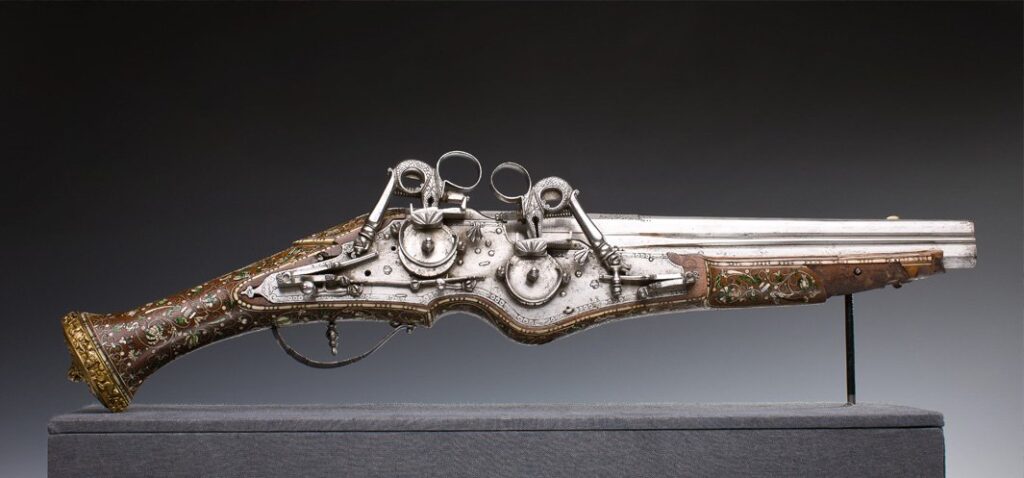
Begun with the first donations in the late 19th century and curated by such experts as Prof. Zbigniew Bocheński, Dr Stanisław Kobielski and Dr Irena Grabowska, the collection of military artefacts has grown to around 11,000 items covering various fields of weaponry. It currently houses many valuable national and international artefacts, which bear witness not only to famous battles fought by Poles, but also serve as mementos of renowned commanders: Stanisław Jabłonowski, Stefan Czarniecki, Józef Piłsudski and many others. Supplemented by donations from renowned collectors and many individuals, as well as, albeit to a lesser extent, by depositories (including the Jagiellonian University and the General Sikorski Institute in London) and ongoing acquisitions, it possesses many valuable exhibits of the highest international standard.
The most beautiful collection of artefacts consists of weapons used from the mid-16th to the late 19th century. It includes both ordinary functional weapons and true works of art – richly inlaid, gilded, etched, and various types of armour, edged weapons and firearms.
A valuable part of the collection consists of hussar armour from the second half of the 17th century, which continues to attract interest from all over the world to this day. Mention must also be made of sabres, of which the Kraków Museum possesses a substantial collection, ranging from the oldest Hungarian-Polish examples, which became widespread in our country during the reign of Stefan Batory, to typically Polish sabres, which evolved over two centuries and had a significant influence on the development of European sabres. Among them are examples beautifully decorated by skilled Armenian masters, as well as those which, thanks to inscriptions on the blades, have a commemorative or devotional character. The collection is complemented by insignia of military authority: gilded maces set with precious stones and, a world-unique piece, a hetman’s standard mounted on a long, five-metre pole, once belonging to the Lubomirski family of Wiśnicz. Particularly noteworthy is the caracena armour of Stanisław Jabłonowski, Grand Crown Hetman and participant in the battles of Chocim and Vienna. There is a large collection of edged weapons in the form of swords from Italy, Germany and France, which were widespread in Poland at the courts of the Saxon Electors – Augustus II and Augustus III.
Firearms can be admired, ranging from the oldest 16th-century examples to rare and valuable works by German, French and Polish gunsmiths active in subsequent centuries.
There is no shortage of items bearing the signatures of top-class craftsmen: Andrzej Kownacki, Eligiusz Colette, Szomański of Tulczyn, and Ignacy Höfelmayer. Here we find artefacts surprising in their design and construction, and even those that sometimes bring a slight smile to the face: axes and clubs combined with firearms, shooting canes, or impressive giant multi-barrelled muskets.
Hunting weapons, favoured by our ancestors, are represented by interesting examples of cleavers, hunting knives, coat-of-arms bandoliers, cartridge pouches, and above all Cieszyn shotguns, which are notable for their beautiful decoration and intriguing design, setting them apart from other firearms.
An important part of the collection consists of uniforms. Among them are those dating from the dramatic struggles for independence – from the Kościuszko Uprising, through the November and January Uprisings, right up to 1918 – and serving as mementoes of many famous commanders: Benedykt Kołyszka, Franciszek Paszkowski, Henryk Dembiński, and above all – Józef Piłsudski. The collection also includes civil service uniforms, as well as uniforms and uniform components used in other European countries. The collection of decorations deserves special mention, comprising the most important Polish honours – the Order of the White Eagle, the Order of St. Stanislaus, the Virtuti Militari, as well as a vast number of 20th-century military, civilian and commemorative decorations.
Particularly noteworthy is the most valuable in Poland and one of the finest in the world, the collection of Turkish and Persian weapons, comprising all manner of mirrored armour, chainmail, horned helmets, sabres with Damascus blades, knives and shields. The collection is presented in sections at exhibitions in Poland and around the world. Also worthy of mention are the examples of African weapons.
A significant part of the Military Artefacts collection can be viewed in the permanent ‘Weapons and Colours in Poland’ Gallery in the MNK Main Building.
Compiled by: Michał Dziewulski
Curator of the Military Artefacts collection: Michał Dziewulski
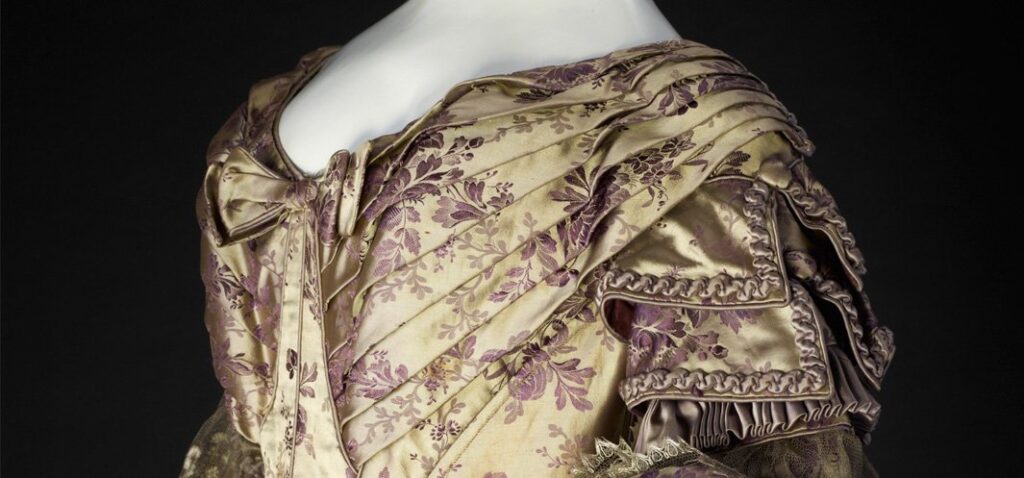
The collection of textiles and clothing contains over 25,000 artefacts. The collection comprises clothing and upholstery fabrics, fabrics used for interior decoration, liturgical vestments, as well as garments and fashion accessories.
Clothing and upholstery fabrics
The most numerous items in the group of clothing and upholstery fabrics are Italian, French, Persian and Turkish silk fabrics. Particularly noteworthy are the gold-threaded fabrics produced in Persia during the reign of Shah Abbas I the Great (1588–1629), Florentine velvets from the 15th and 17th centuries, and patterned silks manufactured in Lyon from the late 17th century onwards. The oldest part of the collection is a valuable group of Coptic textiles, dating from the 4th to the 9th centuries.
Decorative textiles
Among the decorative textiles, the large collection of carpets deserves special mention: Persian, Turkish, Turkmen, Caucasian and Polish. The most valuable artefact is a monumental Turkish carpet made in the late 16th century in the sultan’s workshops in Cairo, decorated with chintamani motifs. A garden carpet from around 1700 is a beautiful example of Persian carpet-making.
Also worthy of note are two 17th-century Turkish tents, decorated using the appliqué technique. One of them was reportedly captured at the Battle of Żurawno in 1676, during the Polish–Turkish War (1672–1676).
The collection also includes silk tapestries made in the Buczacz workshop, as well as Turkish and Persian tapestries and those woven from French and Russian fabrics. Particularly noteworthy is a series of embroidered tapestries made in Poland in the 18th century.
We also have a rich collection of Polish kilims dating from the late 18th century to the Art Deco period, including several designed by renowned Polish artists during the Art Nouveau period and produced at the Kraków Workshops between 1913 and 1926.
Clothing and fashion accessories
The collection of secular clothing illustrates changes in fashion from the 18th century to almost the present day. It is complemented by fashion accessories: fans, parasols, headwear, hat pins, shawls and lace mantillas. Among the women’s fashion accessories, the collection of cashmere shawls is particularly noteworthy. The collection also includes kontusz garments from the 17th to the 19th century. A particularly valuable set comprises kontusz sashes from numerous Polish, Persian, Turkish, French and Russian workshops.
The costume section of the collection is continually expanded through the acquisition and donation of historical garments and fashion accessories, including those from the last 50 years.
An important part of the collection is the extensive collection of Jewish textiles and garments.
Liturgical vestments
The collection of liturgical vestments is highly diverse and comprises artefacts made from patterned silk fabrics, decorated with embroidery, crafted using the tapestry technique or made from kurdyban, dating from the 15th to the 20th century. Among the most valuable items are Gothic chasubles with embroidered front panels, an 18th-century chasuble made using the tapestry technique in Bieździatka near Krosno, and a Baroque cope made of Persian fabric.
Compiled by: Joanna Regina Kowalska
Curator of the textiles and clothing collection: Joanna Regina Kowalska
e-mail: jkowalska@mnk.pl
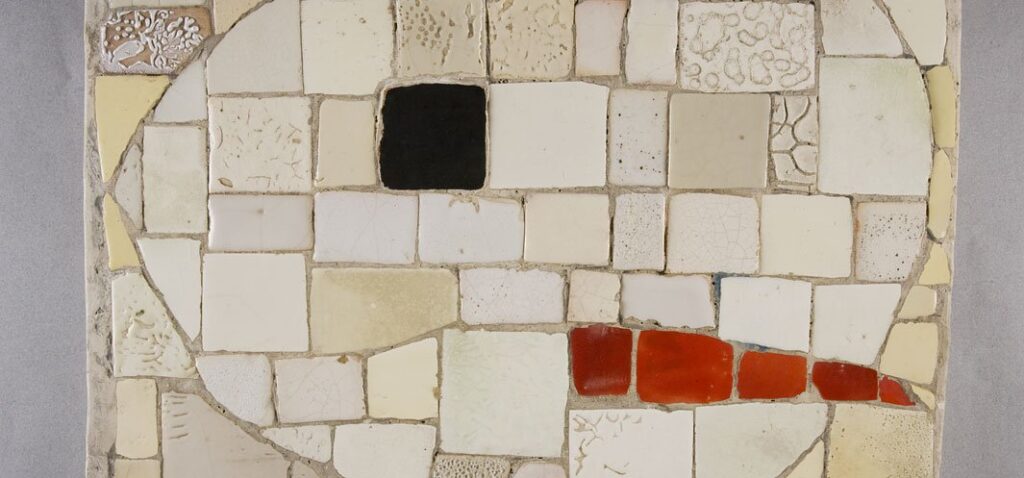
The ceramics collection is one of the largest within the Department of Arts and Crafts, Material Culture and Military Artefacts, comprising over 11,000 artefacts, ranging from Romanesque floor tiles and medieval vessels to works by Kraków-based ceramic artists created in the early 21st century.
The sub-section collects European ceramics, featuring objects made in many countries from various ceramic materials, with porcelain and faience leading the way. We collect both factory-made items and unique, original pieces. Our collection also includes a large group of stove tiles and examples of traditional folk pottery.
Over 800 artefacts can be viewed in the permanent exhibition at the Artistic Crafts Gallery; ceramics are also frequently featured in temporary exhibitions organised by the National Museum, and individual sections of the collection are being progressively catalogued.
The collection is the result of donations from many individuals and institutions, as well as acquisitions made by both the National Museum and the Museum of Technology and Industry, whose collections were incorporated into the national holdings in 1950. The two collections complemented each other perfectly, and their merger has resulted in one of the richest, most valuable and most diverse collections of ceramics in Poland.
Compiled by: Dr Bożena Kostuch
Curator of the Ceramics Collection: Dr Bożena Kostuch
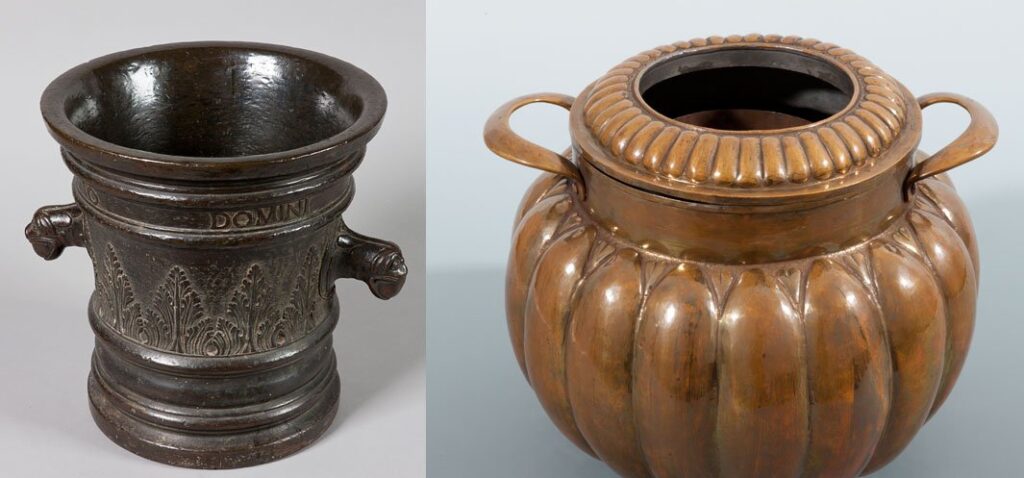
Metals
The Metals section houses artefacts made of metals and their alloys, sometimes combined with other materials. It is certainly one of the largest collections of its kind in Poland, although the artistic quality varies. The collection currently comprises over 4,300 items, including objects from archaeological excavations as well as those made almost in our time, predominantly from Poland and Europe; a small group consists of works created in the Middle East and other parts of the world. A significant part of the collection consists of pewterware, i.e. objects made of tin – tableware and guild vessels, liturgical vestments and other items. Another interesting group of artefacts consists of bell-foundry works, i.e. items cast from copper, brass and bronze; these are mostly church bells, kitchen mortars and apothecary mortars. Other collections worthy of mention include artefacts from the field of coppersmithing (copper-forged vessels), as well as locksmithing and blacksmithing, including iron fittings and door locks, door handles, padlocks, and safes with multi-pin locks. It is also worth mentioning the unique collection of items made by participants in cold metal forging courses, conducted under the artistic guidance of Kazimierz Młodzianowski in the workshops of the Museum of Technology and Industry in Kraków. Furthermore, the collection also includes a range of small items, including vessels, tools, inkwells, statuettes, frames, etc.
Organic Materials
The Organic Materials sub-section comprises over 2,200 artefacts. As the name of the sub-section suggests, it contains objects made from materials of organic origin, i.e. bone, leather, horn, tortoiseshell, various types of wood, plants, wax, etc. It encompasses a variety of objects representing the material culture of everyday life in the past – various trinkets, devotional items, accessories, and elements of clothing – snuff boxes, walking sticks, pipes, handbags, and wallets. Among the more valuable collections, the collection of small-scale bone carvings stands out, including a portrait of Augustus II signed by W. Krüger (after 1720) and a portrait of Voltaire signed by A. Meugniot (1827), as well as a group of figures of Christ from modern crucifixes. Another interesting group of exhibits is the collection of leather bindings for documents from the 16th–18th centuries and book bindings, among which those made by participants in the bookbinding course, led by Bonawentura Lenart in the workshops of the Museum of Technology and Industry in Kraków, are particularly noteworthy. Also worthy of note is the collection of confectionery moulds, among which the carved and signed gingerbread moulds bearing the likenesses of Queen Cecilia Renata and Władysław IV (1640) are particularly noteworthy. Also worth mentioning is the small but unique collection of ceroplastics, i.e. works made of wax, including the so-called Tyniec nativity scene, nativity figures and portraits of various personalities from the late 18th and early 19th centuries.
Educational Aids
The Educational Aids Section, currently comprising nearly 8,000 artefacts, originates almost entirely from the legacy of the Technical and Industrial Museum in Kraków, which was closed in 1950.
This collection most fully reflects the educational aims of that museum’s collection, where, in addition to finished products, samples of various materials used in their manufacture were also gathered, illustrating the individual stages of their processing. Thus, this sub-section houses a collection of samples of clay and ceramic glazes (including models depicting the various stages of making a plate), glass, leather, minerals, paper and other materials. Furthermore, there is a collection of natural animal horns and bones, as well as plant fibres. An interesting group consists of glass models of gemstones and their cuts – it is worth noting that this also includes copies of the most famous gemstones. Also worth mentioning is the collection of plaster copies of ancient and medieval objects, cameos and intaglios, medals, etc. The collections of objects listed above are often helpful in accurately identifying the materials from which other artefacts and museum objects are made.
Varia
The Varia collection currently comprises over 5,000 artefacts. It is a completely unique collection, the core of which consists of authenticated mementoes of eminent Poles (mainly personal items) and artefacts commemorating important historical events, as well as the ceremonial celebrations of their anniversaries. The largest groups consist of mementos of Adam Mickiewicz, Olga Boznańska, Henryk Siemiradzki, Tadeusz Kościuszko, and, most recently added to the collection, mementos of Józef MNK Czapski.
A significant group consists of artefacts from national uprisings, including so-called “mourning jewellery”, made after the fall of the January Uprising. Also worth noting is an interesting collection of Masonic items, mainly from the collection of Emeryk MNK Czapski – badges of Masonic lodges and the ranks of their members, as well as parts of ceremonial attire, such as aprons and sashes with jewels.
In addition to the aforementioned groups of memorabilia, the collection also includes so-called “curiosities” and items whose classification into other sections was problematic due to the materials used in their manufacture.
Compiled by: Monika Paś
Curator of the collection of metals, organic materials, plastics, teaching aids and miscellaneous items – Monika Paś, mpas@mnk.pl
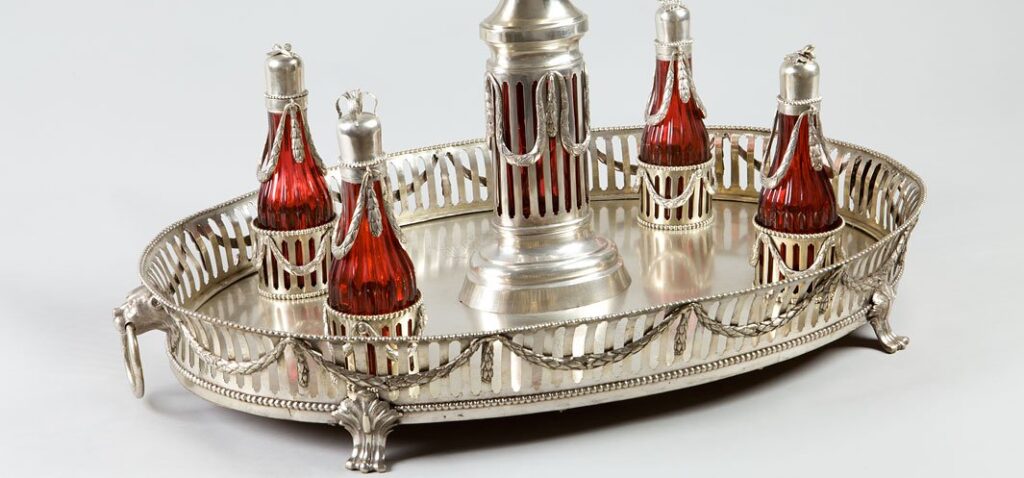
Goldsmithing
The National Museum in Kraków’s goldsmithing collection is an exceptionally diverse collection, comprising sets of liturgical silverware, cutlery, enamel-decorated objects, jewellery and clothing accessories. Among the liturgical silverware, one can distinguish sets used for liturgical purposes, including the most valuable artefact, the so-called Włocławek chalice from the first half of the 10th century. The second part of the collection comprises liturgical silverware from the 17th–18th centuries intended for secular use, represented by items from the Polish-Lithuanian Commonwealth, including Kraków, Gdańsk, Toruń, Lviv, Vilnius and Warsaw. The European centres represented in the collection include Nuremberg, Augsburg, Hamburg and Wrocław, and in the case of 19th-century artefacts, also Vienna and St Petersburg. Among the exhibits in this sub-section, a collection of Judaica made of silver is particularly noteworthy; these include Torah shields and crowns, balsam boxes and jades. Thanks to donors, including Emeryk MNK Czapski, the Museum possesses the finest collection of Polish spoons from the 16th and 17th centuries. Among the clothing accessories made of silver and gemstones in the collection is a rich set of Polish buttons and metal belts produced between the 17th and 19th centuries. This part of the collection is complemented by a collection of jewellery, including rings, brooches, bracelets and watches – mainly from the 18th and 19th centuries, including a unique set of patriotic jewellery worn to express civic duty and Polish national sentiment in times of threat to the homeland or national mourning. Goldsmithing is also represented by mementoes of eminent Poles, made from precious materials, including those of Tadeusz Kościuszko, Prince Józef Poniatowski and King Stanisław August Poniatowski.
Gems
The collection of gemmoglyphics, comprising 3,300 items, is one of the most valuable groups of historical artefacts in the department’s holdings. The core of this collection – 2,500 objects – consists of the collection of Konstanty Schmidt-Ciążyński, bequeathed to the Museum in 1886. The collection includes, among other items, Mesopotamian cylinder seals, Sassanid gems, scarabs and scaraboids, magical gems, and Greek and Roman intaglios and cameos. A large part of the collection consists of signed gems, mainly intaglios from the 18th and 19th centuries from Italy, France and England. Smaller collections forming a sub-section comprise sets of seal stamps bearing Polish and foreign noble coats of arms, originating from the collections of Mathias Bersohn and Emeryk MNK Czapski.
In 1949, along with the bequest from the collector Leona Kostka, the Museum acquired another diverse collection of gems comprising both ancient artefacts and examples of modern and 19th-century glyptics.
Furniture
The collections of the National Museum in Kraków include unique sets of various types of Polish and foreign furniture dating from the 15th to the mid-20th century. Particularly noteworthy is the collection of small furniture pieces from the 17th and 18th centuries. It comprises chests, guild counters, trunks, caskets and boxes, decorated using marquetry and inlay techniques. The 16th-century cabinets deserve special mention: a Spanish one, the so-called ‘travel’ cabinet, and two carved pieces made in Genoa. Equally valuable are the Baroque and late Baroque Polish furniture from the Gdańsk region and the so-called Kolbuszowa furniture. The museum also possesses furniture from Silesia, Saxony and France. Among the 19th-century pieces, the most numerous are Empire and Biedermeier-style furniture, both Polish and Viennese. Unique items include furniture with Art Nouveau features, designed by MNK Wyspiański, as well as Edward Trojanowski, Karol Maszkowski and Karol Tichy. This section contains a small but significant collection of musical instruments. Of particular note are the violas da gamba from the Groblicz family workshops: one by Marcin Groblicz I from 1601 and another by Marcin Grobilcz V from the early 18th century. Among the 19th-century artefacts, instruments from the Kraków school of violin-making are particularly noteworthy: these include a violin by Wojciech Pilchowski and guitars by Szymon Gutowski and Tomasz Pasamoński.
Glass
The glass collection spans artefacts from the Roman Empire to contemporary artistic works from the early 21st century. A deposit entrusted to the Museum by the city conservator holds a unique place in the collection. It consists of a collection of stained-glass windows from the Dominican Church of the Holy Trinity in Kraków, dating from the 13th to the 15th century. Other valuable collections include: a collection of Baroque glass from Polish glassworks such as the Crystal Glassworks near Lubaczów, as well as those in Naliboki and Urzecze. The glassworks in Urzecze produced the only surviving set of Baroque mirrors in Polish museum collections. Furthermore, the Museum possesses Poland’s largest collection of so-called ‘service glassware’ from Polish and Czech workshops dating from the turn of the 18th and 19th centuries. Thanks to the collection formerly belonging to the Technical and Industrial Museum and numerous donors, the Museum holds one of Poland’s finest collections of Central European, mainly Czech, Biedermeier glass.
The National Museum in Kraków’s acquisition in 1950 of the legacy of the Museum of Technology and Industry supplemented the collection of glass from the second half of the 19th century with pieces representing historicism: glass from Antonio Salviati’s glassworks in Venice and collections of glass from Czech glassworks, commissioned by the Viennese firm L. & J. Lobmeyr. Among the Art Nouveau pieces, the most valuable are the French glassworks by Émile Gallé and the Daum brothers. Among the works from the second half of the 20th century, the unique Polish glass collection includes outstanding early works by Henryk A. Tomaszewski from the late 1940s, works by Jerzy S. Orkus from the 1970s, and a number of works by other distinguished Polish designers.
Clocks
The National Museum in Kraków’s collection of clocks is the richest and most representative in Poland. The majority of it was assembled before the Second World War thanks to private donations and museum acquisitions. A significant part of the collection consists of artefacts from the Museum of Technology and Industry, which were added to the National Museum’s holdings in 1950. The collection currently includes all types of mechanical clocks, including various kinds of table, wall, mantel and cabinet clocks, dating from the 17th to the mid-20th century. The collection of Polish table clocks known as ‘tiled clocks’ from the 17th and 18th centuries contains unique examples of clockmaking from workshops in Vilnius, Toruń, Kraków and Gdańsk. Particularly noteworthy are the clocks by Wolfgang Prenner from Kraków and the table clocks by Jakub Giercke from Vilnius. Among the items from the second half of the 18th century, the Cracovian timepieces are considered particularly valuable – a wall clock known as a ‘cartel’ and a mantel clock featuring a figure of Chronos by Jan Gotfryd Krosz, as well as a rare example of a travelling clock. Among the horological artefacts produced outside Poland, the collection of Parisian and Viennese mantel clocks from the late 18th century and the first quarter of the 19th century, as well as 19th-century wall and table clocks from Central European countries, are particularly noteworthy.
Precision and measuring instruments
The Precision and Measuring Instruments section comprises 200 exhibits used for measurement, weighing and observation. An important part of the collection is a group of non-mechanical clocks, including equatorial and horizontal sundials, as well as sand and oil clocks. A rarity are two large Polish horizontal sundials made in the fourth quarter of the 18th century in Ignacy Manuvir’s workshop in Vilnius.
Among the artefacts from other artistic centres, a Nuremberg table globe depicting the sky, created by Johann Gabriel Doppelmayr and Johann Georg Puschner in 1730, is particularly exceptional. The collection of measuring instruments includes antique measures, set squares, compasses, rulers, thermometers and barometers. Furthermore, the Museum owns an impressive collection of various types of scales and their accompanying sets of weights dating from the 16th to the 20th century. The collection is complemented by telescopes, binoculars, lorgnettes, spectacles, pince-nez and monocles, mainly from the 19th century.
Painting on glass
The collection of the glass painting section, comprising 370 artefacts mainly from the 18th and 19th centuries, brings together artistic and folk examples of glass pane decoration using various painting techniques. The bulk of the collection consists of examples of folk painting from the second half of the 19th century, covering the regions of Podhale, Spisz and Orava. The artefacts were acquired, amongst other things, thanks to the bequest to the National Museum in Kraków from the Museum of Technology and Industry in Kraków, including the largest collection, that of Bronisława Giżycka from Zakopane, purchased in 1921. A separate and smaller group consists of examples of glass painting featuring portraits or genre scenes from French, German or Silesian workshops. A unique artefact is a portable altar made of glass using the stained-glass technique, and decorated with a rare eglomisè-style decoration (a glass-decorating technique involving the engraving of decorative motifs in gold or silver foil applied to the reverse side of the pane and the filling of the engraving with paint). The altarpiece was probably created in Wrocław in the first quarter of the 17th century under the artistic influence of the Dutch milieu.
Compiled by: Alicja Kilijańska
Curator of the collections of gold and silverware, gems, glass, furniture, clocks, IPP, and glass painting – Alicja Kilijańska, akilijanska@mnk.pl