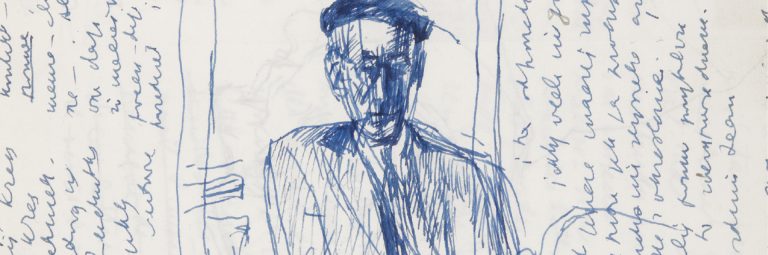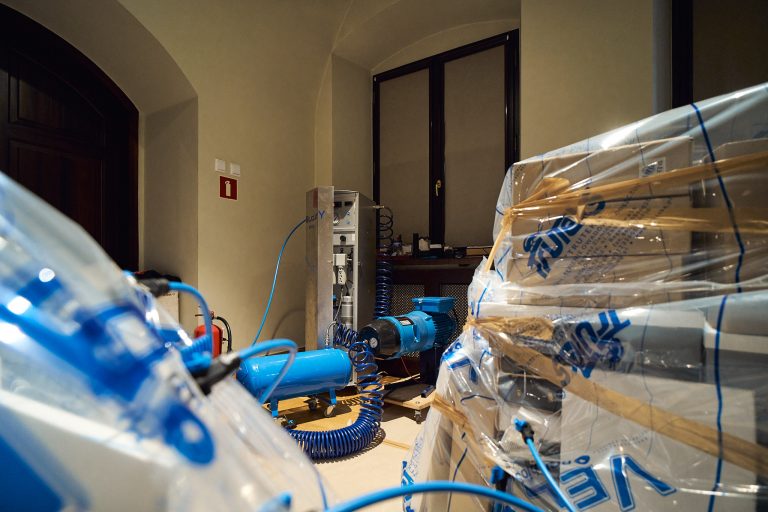
Plans for the modernisation and redevelopment of the MNK Czartoryski Library include initiatives on Wikipedia. We plan for the spaces we are renovating to become a new landmark on the map of Kraków: a wiki -friendly place, that is to say: open to those seeking knowledge of history, fans of curiosities and collectors of interesting facts… Before this happens, we face several years of multi-stage work, involving the preparation and publication of the MNK Czartoryski Museum’s digital resources and the expansion of content about the book collection on Wikipedia and its sister projects.
The MNK’s collaboration with Wikimedia Polska primarily involves the technical preparation of resources and metadata for inclusion in the Wikimedia Commons multimedia repository and Wikipedia articles. The MNK’s resources, in the broadest sense, are incorporated into Wikimedia projects thanks to the work of our resident Wikipedian, Agata Stadnicka, and through activities involving volunteers who join our project during events at the museum and online. Activities on Wikipedia to date have involved adding to and creating numerous articles related to the collections and activities of the National Museum in Kraków, as well as information pages for the community and the public.
The Wikipedian’s tasks include, amongst other things, training the MNK Czartoryski Museum team on the principles of creating articles in Wikimedia projects. It is the Museum staff who know the most about the collections they look after. This is precisely why the support of the MNK Czartoryski Museum team plays such a significant role in developing high-quality content. The plans for the wiki residency include various types of training sessions and events. We will invite the MNK team and the Wiki community to take part – so, for example, you. See for yourself how easy it is to do something that is both meaningful, useful and enjoyable.
The library collections were first assembled in the second half of the 18th century by Prince Adam Kazimierz and Izabela MNK Czartoryski Museum (née Fleming). Their Blue Palace in Warsaw housed a library which, by 1770, already contained 1,645 printed works and manuscripts. After 1783, the MNK Czartoryski Museum moved the library to Puławy. Following the defeat of the November Uprising, the MNK Czartoryski Museum evacuated its estate to Sieniawa and, after 1834, to Paris, before returning with it to Polish soil, to Kraków, in 1876.
Along with the collections, the library was made accessible; it operated alongside the MNK Czartoryski Museum until the Second World War as a private institution, maintained by the Sieniawa Estate (family trust) of the Czartoryski family.
In 1950, the collections came under the administration of the National Museum in Kraków. Towards the end of the decade, between 1958 and 1960, the MNK Czartoryski Museum acquired its own premises: a building erected on Św. Marka Street, one of the few examples of post-war architecture within the boundaries of Kraków’s Planty Park. In 2016, the MNK Czartoryski Museum collection, together with the book collection, was purchased by the State Treasury of the Republic of Poland and transferred to the National Museum in Kraków, with the aim of safeguarding, permanently and indivisibly preserving, and continuing to make it available to the public.
and… → here we are! In 2024, the National Museum in Kraków secured funding for the project: “The MNK Czartoryski Museum – extension and refurbishment of the National Museum in Kraków”. The project is co-financed by the European Union from the European Regional Development Fund under the European Funds for Infrastructure, Climate and Environment Programme 2021–2027. The project will run from spring 2024 to spring 2028. The project will involve conservation and restoration work, the purchase of equipment and furnishings, and information and promotional activities.
What do the Czartoryski Library’s collections actually contain? Among the 321,000 volumes, the collection catalogue features priceless and unique illuminated manuscripts and early printed books from across Europe. These handwritten documents constitute a one-of-a-kind academic archive of science and culture.
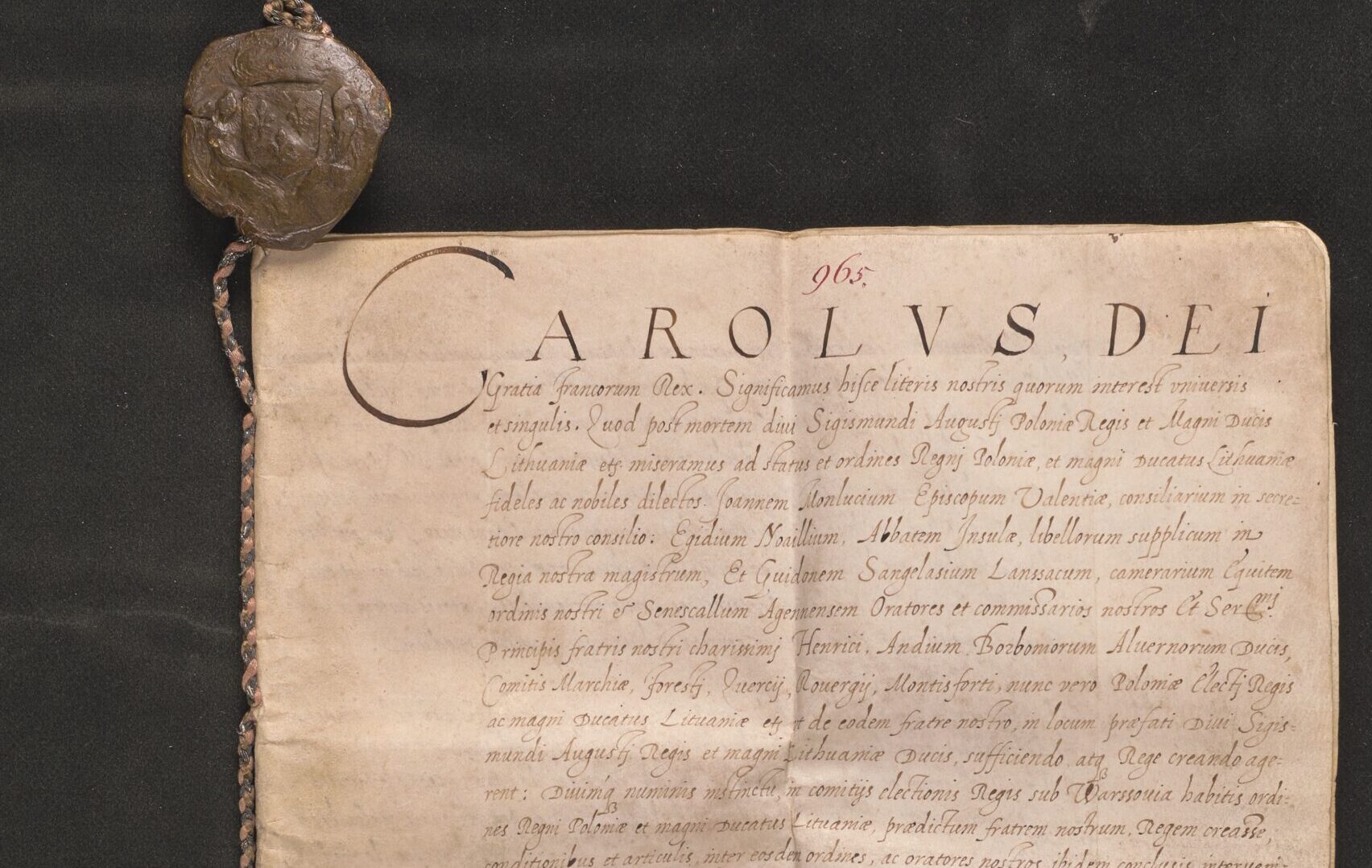
The MNK Czartoryski Library Archive and Manuscript Collection contains 14,000 volumes. Among them are also the Kosice Privilege, granted by Louis I of Hungary in 1374, the Jedlne Privilege granted by Władysław Jagiełło in 1430, and the document of the Union of Horodło, sealed by Jagiełło and Vytautas, concluded in 1413 between the Crown of the Kingdom of Poland and the Grand Duchy of Lithuania.
The collection contains truly unique items and historical artefacts.
One of them is the original of the treaty known as the Prussian Homage, in which, as its full title states: George, Margrave of Brandenburg, and Frederick, Duke of Legnica and Brzeg, as mediators, issue a document of the treaty concluded between Sigismund, King of Poland, and Albert, Margrave of Brandenburg, Grand Master of the Teutonic Order, by virtue of which the state of war between the parties was ended and a secular duchy was established from Prussian lands as a fief of the King and the Crown, granted in hereditary possession to Albrecht; furthermore, economic and trade relations between the two countries were regulated.
An important part of the Library and Archive’s holdings consists of the MNK Czartoryski Museum’s documents, such as the grant of the ducal title to the family in 1442, or the certificate of honorary citizenship of the city of Kraków awarded to Władysław Czartoryski (1880). Alongside official materials, one can find letters and examples of the creative work of family members and their distinguished friends – Frédéric Chopin, Piotr Norblin and others. Thanks to these resources, it is possible to take a truly close look at the artistic and intellectual milieu supported by the family during their time in Puławy and later at the Hôtel Lambert in Paris.
Valuable? Priceless! Delicate in their physical form – parchment, ribbed paper, seal impressions and leather bindings – these items require special storage conditions. It is not every day that one has the opportunity to see with one’s own eyes and hold in one’s hands such unique items as Nicolaus Copernicus’s letter to Jan Dantyszek, Bishop of Chełmno (Frombork, 1537). However, the fact that these are historical artefacts does not make it easy to display and make them accessible on a permanent basis. It is precisely for this reason that one of the aims of the activities surrounding the MNK Czartoryski Museum is to prepare digital materials aimed at a wide audience and to upload copies of them to the publicly accessible Wikimedia Commons platform.
Thanks to the collaboration between the MNK Czartoryski Museum team and a resident Wikipedian, there will be an opportunity to take a fresh look at this priceless collection of books. The work plan for the Library’s collection includes, amongst other things, testing tools that will make digitised, handwritten documents more accessible through appropriate metadata processing or text-recognition software. The support of new technologies could significantly accelerate the pace of cataloguing the collections and broaden access to their content for those wishing to use the Library’s resources for their own research, creativity, discovery and enjoyment.

===
Project: “The MNK Czartoryski Museum – extension and refurbishment of a branch of the National Museum in Kraków” is co-financed by the European Union from the European Regional Development Fund under the European Funds for Infrastructure, Climate and the Environment Programme 2021–2027, PRIORITY VII: Culture, Area 1: Development of cultural infrastructure (listed and non-listed). Implementation period: March 2024 – March 2028 | Total project cost: PLN 56,194,788.50 | Co-financing from the European Regional Development Fund: PLN 37,181,150.41 ||| #EUFunds #EuropeanFunds