Event in Polish Only
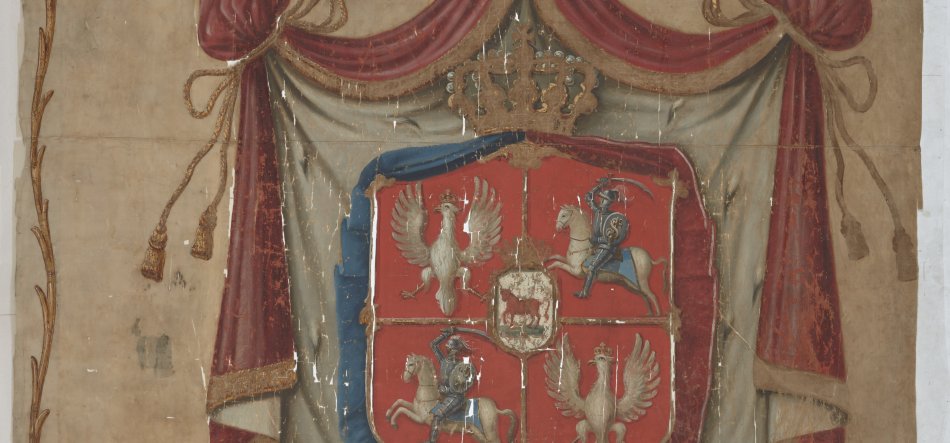
The banners and standards of the Crown Army served as a key element of visual communication. They also reflected the modernisation processes and ideological changes of the final years of the Polish-Lithuanian Commonwealth. This paper examines the banners and standards of the Crown Army between 1764 and 1795 as military insignia and as vehicles for political and symbolic content during the twilight years of the Polish-Lithuanian Commonwealth.
The author will take the election of Stanisław August Poniatowski as the starting point for his discussion. He will then examine the military reforms associated with it, focusing on the visual transformations of banners and standards and the development of the ceremonial practices surrounding them. The role of military insignia during religious and state ceremonies, as well as during armed conflicts, will be addressed, with particular emphasis on their significance during the Four-Year Sejm and the Kościuszko Uprising. Based on preserved museum artefacts, a proposed typology of banners and standards will be presented, based on the evolution of depictions of the White Eagle – from forms referencing the Saxon tradition to compositions from the late 18th century.
An event in the Bronioznawca Academy series.
Franciszek Viscardi: PhD student at the Doctoral School of Humanities, Jagiellonian University. Member of the Polish Society of Vexillology, the Polish Heraldic Society and the Association of Lovers of Ancient Weapons and Colours. He is preparing a doctoral thesis entitled ‘The lost heritage of many nations. Military banners of the former Polish-Lithuanian Commonwealth from the 17th–18th centuries’.
 MNK Main Building
MNK Main Building
MNK Main Building