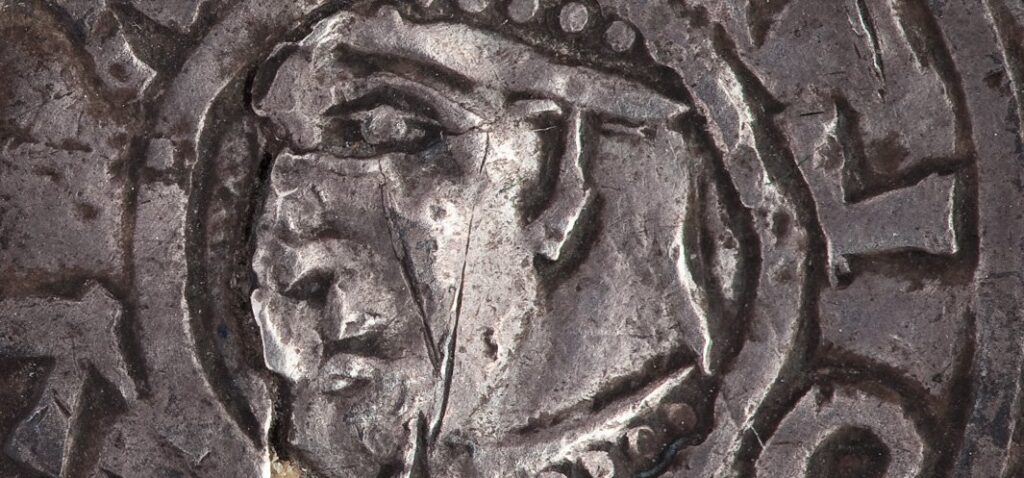
The Numismatic Cabinet was founded in 1883. The collection, modest at first, grew mainly thanks to the generosity of private donors, such as MNK Matejko, Leonard Lepszy, Henryk Bukowski, Henryk Gąsiorowski, Karol Plage, and Maria and Ludwik Żytyński. The donation of Emeryk MNK Czapski’s collection in 1903 brought about a radical change in the Cabinet’s standing, as its collection now included the most representative collection of Polish coins, medals and banknotes, featuring a number of unique items, such as Bolesław Chrobry’s denarius GNEZDVN CIVITAS and Władysław Łokietek’s ducat.
Further donations soon followed, including sets of coins from hoards (Dzierżnica II, Pełczyska). Among the most important donors were Wiktor Wittyga, Julia and Piotr Umiński, Bronisława Starzeńska, Henryk Mańkowski, Franciszek Biesiadecki, the Kraków City Council, Władysław Bartynowski, Adam Wolański and Stanisław Mineyka. Items were also acquired through purchases and the exchange of duplicates. After the Second World War, the Cabinet was enriched by further donations, including those from Karol Halama – ancient coins; Jadwiga and Andrzej Kleczkowski (from Zygmunt Zakrzewski) – Piast coins – and, in recent years, donations from Lech Kokociński – including ancient and counterfeit coins – as well as from William Stancomb, Jacek Budyn, Tadeusz Zawadzki, Mirosław Kruszyński and Jan J. Kołecki. The collection continues to be expanded through purchases.
Currently, the Cabinet’s collection comprises approximately 112,000 items. It consists of, amongst others:
The sub-collection of ancient coins comprises Greek coins from the Archaic to the Hellenistic periods, Celtic coins, including the famous Kraków-type stater, Roman Republican and Imperial coins, and Byzantine coins. The most numerous are the coins of the Roman Empire. An interesting group is formed by Celtic and so-called Germanic coins.
Within the collection of Polish coins, the set of denarii from the early Piasts, the Hebrew bracteates of Mieszko III, the groszy of Casimir the Great, the first Polish gold coins and thalers, as well as the Gdańsk and Toruń donatives (16th–17th centuries) are particularly valuable.
Among the numismatic items historically associated with Poland, mention should be made of Teutonic coins from the Baltic fiefdoms, Saxon-Polish coins, and private and substitute coins. A significant group consists of Oriental coins ranging from medieval to modern, including Arabic, Turkish, Tatar, Indian, Chinese, Korean and Japanese coins. World circulation coins also form an important collection.
The collection of paper money and securities contains Polish and foreign banknotes from almost all over the world, covering the period from the late 18th century to the present day.
The collection includes, amongst other things, a complete set of Kościuszko banknotes from 1794, complete with their spine fastenings, currency of the Duchy of Warsaw with a unique illustrated design, valuable items from the Kingdom of Poland in the zloty currency, including a hand-drawn design by Jan Minheymar, and banknotes denominated in silver roubles. The collection also contains securities from the 19th and 20th centuries, substitute currency ranging from 19th-century dominial bonds to other substitute bonds from the first quarter of the 20th century, including issues by the Polish Legions, and bonds originating from Kraków, Lviv and other places of issue.
The collection of medals (16th–21st centuries) comprises primarily Polish medals (royal and private) as well as foreign ones, including works by the most distinguished artists in this field: Samuel Ammon, Sebastian Dadler, Jan Höhn the Elder and Jan Höhn the Younger. Also worthy of note is the rich collection of medals associated with the Saxon electors on the Polish throne (Augustus II and Augustus III), Stanisław August Poniatowski, and 19th- and 20th-century medals, among which are works by such artists as David d’Angers, Władysław Oleszczyński, Carl Radnitzky, Anton Scharff, Jan Raszka, Jan Wysocki and Józef Gosławski. The sub-section also includes a collection of religious medallions.
The ‘varia’ sub-collection consists primarily of a collection of counterfeit coins, which is the only collection of its kind and size in Polish museums. It comprises approximately 3,800 coins, as well as 19th-century counterfeiting dies made by Józef Majnert, an employee of the Warsaw Mint, who counterfeited rare Polish coins between 1836 and 1851. The collection includes both modern collector’s forgeries and those from the period.
The numismatic collections and library are made available for research purposes in accordance with the National Museum in Kraków’s access policy, subject to prior agreement and arrangement of a date with the Cabinet’s staff.
Access to the collection is available between 9.00 am and 3.00 pm
Team: