What kind of museum activities would young people like to attend with their class? What would young people like to talk about, but don’t always have the time or space for? “uŻYJ muzeum” was an opportunity to design their own activities in an art gallery – and invite their peers to join them.
In 2026, we are offering the first 30 classes free access to selected activities. The project is being carried out in partnership with the PZU Foundation.
This time, we decided to set aside art history, history and cultural knowledge. These are important, and they accompany us during museum lessons and guided tours. However, we also wanted to offer school groups a completely different kind of activity: topics that are relevant and important in the everyday lives of young people. Why? Because we believe that art is a great inspiration for conversations about what matters most: it has a special power to spark discussion and the exchange (or change!) of views; it allows us to better understand ourselves and others in a safe way; and it provokes reflections that no one had anticipated before.
Human rights? Care for the environment? Mental health? The search for one’s own identity? The development of artificial intelligence? Or perhaps something completely different? In this project, we asked young people what matters to them here and now, and art helps us address these topics in a meaningful and open-minded way. Such museum sessions are a great option for a form period or class bonding activity that’s unlike any other.
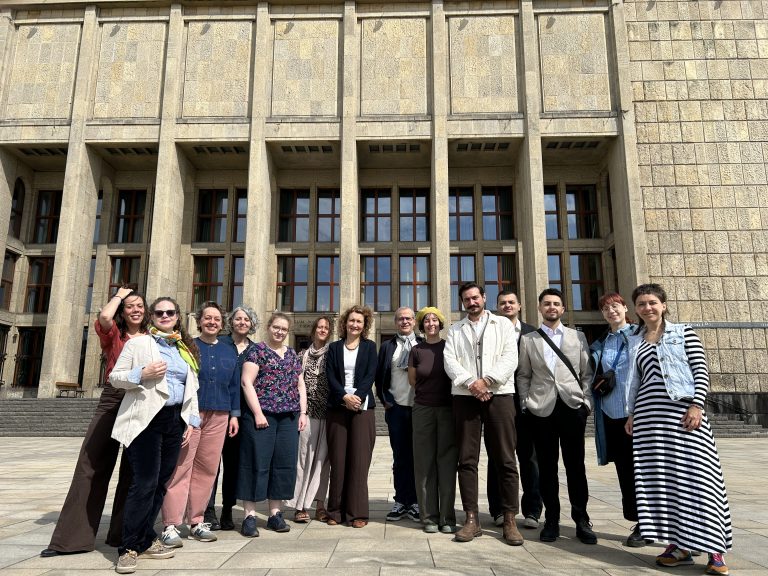
We invited pupils from Years 7–8 of primary and secondary schools, along with their teachers, to take part in the “uŻYJ muzeum” project. Through an open call, we selected five groups with whom we worked from April to June 2025. We were delighted to receive applications from a wide variety of groups – our new collaborators included pupils from sixth-form colleges, technical colleges and a primary school in three different towns, all brimming with (very diverse!) ideas and a keen desire to get involved.
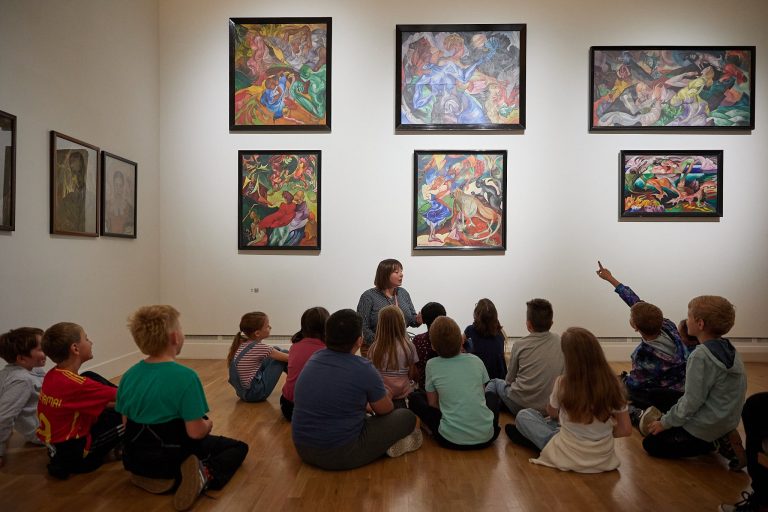
During workshops held within the selected permanent exhibitions at the MNK, we worked together to create lesson plans on topics chosen by the young people, designed to enrich our educational programme for schools in the 2025/2026 academic year. We scoured the galleries in search of inspiring works of art, shared our thoughts, and took part in discussions and brainstorming sessions.
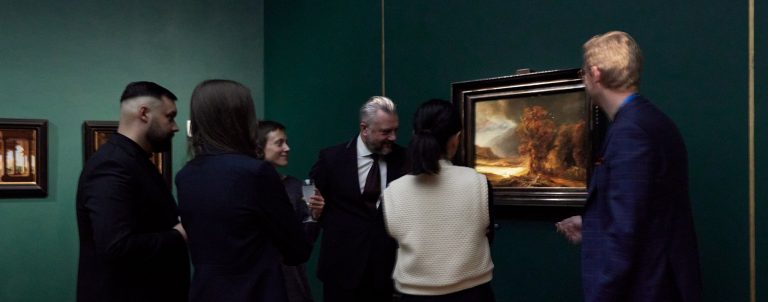
We racked our brains over what teaching methods young people prefer and what makes a visit to the museum valuable and appealing to them. All this was done so that we could finally draft the lesson plans, select the necessary props, and… thoroughly test the sessions before inviting the peers of their creators to take part. Our collaboration concluded with a party in the MNK Czapski garden, which was not only an opportunity to celebrate the results but also to evaluate the project. What did our activities look like in practice? We invite you to check out the photo gallery!
And what was the best part of the project, according to the young people? Above all, the chance to be part of a group and work well together, the opportunity for conversation and discussion, interpreting art ‘in their own way’, and gaining a sense of influence over reality. But the snacks, coffee in the back room and… the mummified cat will also be fondly remembered.
According to the teachers, on the other hand, the positive aspects of the project included the chance for socialising, developing creativity, engaging with art without pressure, and the interestingly planned workshops. Here is one of the comments: “A fantastic project that the young people were delighted with. It teaches teamwork and sensitivity, and gives a sense of agency.”
For the MNK Education Department, the project was an opportunity for creative experimentation, getting to know an important group of our audience better, and introducing valuable new elements to the Museum’s programme.
Time, however, proved to be a challenge for all of us – balancing the project with other school and museum duties, not always convenient travel, and managing to complete the intended tasks within the planned deadlines.
During the project, we drew on the experience gained through our collaboration with the OFF school Foundation. As part of this collaboration, the young people developed the workshops “Observe – don’t judge” and “Don’t ask – just create”, which took place during the “STOP AND SEE” conference for teachers on 19 February 2025.
Each project group prepared a lesson plan on a topic of their choice and in a selected gallery:
‘FREEDOM’ – 20th–21st Century Polish Art Gallery at the MNK Main Building
‘WELL-BEING’ – 20th–21st Century Polish Art Gallery at the MNK Main Building
‘INTERVENTION’ – 20th–21st Century Polish Art Gallery at the MNK Main Building
‘BODY’ – Sources. Gallery of Ancient Art at the MNK Arsenal
‘SELF-ACCEPTANCE’ – Gallery of 19th-Century Polish Art at the MNK Sukiennice
In order to refine the sessions down to the last detail and to incorporate the views of an even wider group of young people in their development, we thoroughly tested all the sessions.
The testers were other school classes attended by young people from our project groups, as well as a visiting class from the Secondary School of Fine Arts in Tarnów. Their feedback proved to be very valuable.
MNK Matejko Secondary School in Wieliczka
Students: Patrycja Bach, Weronika Kaja, Nadia Krzyśkiewicz, Małgorzata Marciniak, Olivia Pająk, Emilia Synowiec, Emilia Tylek
Supervision: Melania Gurgul
MNK coordinators: Jagoda Gumińska-Oleksy, Education Department
Electrical School Complex No. 1 in Kraków
Students: Franciszek Drozdek, Jakub Kasprzyk, Bartosz Rudnicki, Filip Wnęk
Supervision: Agnieszka Samborek
MNK coordinator: Katarzyna Maziarz-Górka, Education Department
Clothing School Complex No. 1 in Kraków
Students: Martyna Kozakowska, Patrycja Kuśmierkiewicz, Mateusz Warchoł, Katarzyna Krzyściak, Anastazja Kmita, Paulina Szczyrbak, Vanessa Stachowska, Weronika Mrożek, Sabina Wcisło, Jagoda Chudziak, Zuzanna Rymarczyk
Supervisor: Magdalena Klasa
MNK representatives: Katarzyna Mrugała, Education Department
Jan Matejko State Secondary School of Fine Arts in Nowy Wiśnicz
Pupils: Gabriela Adamczyk, Jagoda Dekert, Aleksandra Małyszek, Aleksandra Mruk, Julia Sarad, Matylda Krzywda
Supervision: Ewelina Bochnak-Wojtanowicz
MNK representatives: Aleksandra Jaremko, Education Department
Tadeusz Kościuszko Primary School No. 2 in Wieliczka
Pupils: Blanka Kędys, Paweł Karkosz, Julian Kowalski, Barbara Jędrzejewska, Nina Klimczak, Wiktoria Wojnarowska, Martyna Wojnarowska, Marcin Mazur, Bartosz Jurecki
Supervision: Iwona Jarosik
MNK representatives: Anna Orzeł, Education Department
[10.03.2026] aktualizacja:
In 2026, we are offering the first 30 classes free access to selected activities (see below!). This project is being run in partnership with the PZU Foundation.
Classes can be booked from 16 March 2026 by emailing: rezerwacja@mnk.pl or by phone: +48 12 433 57 44
When making a booking, please provide:
Please note that the booked activities are self-guided – they are not led by a museum educator.
The class works independently using a set of materials and props provided on site.
Booked activities must be completed by 29 November 2026.